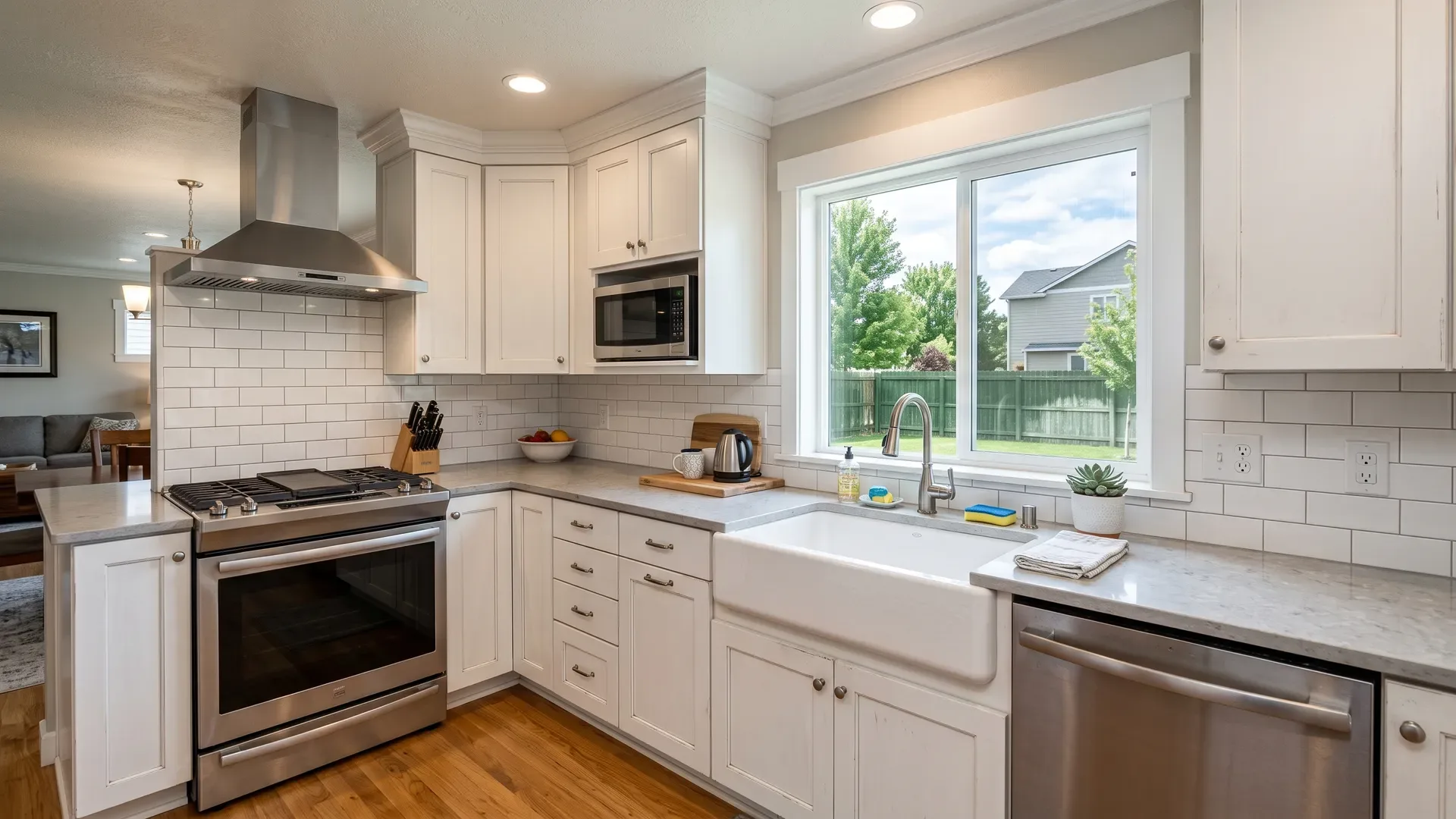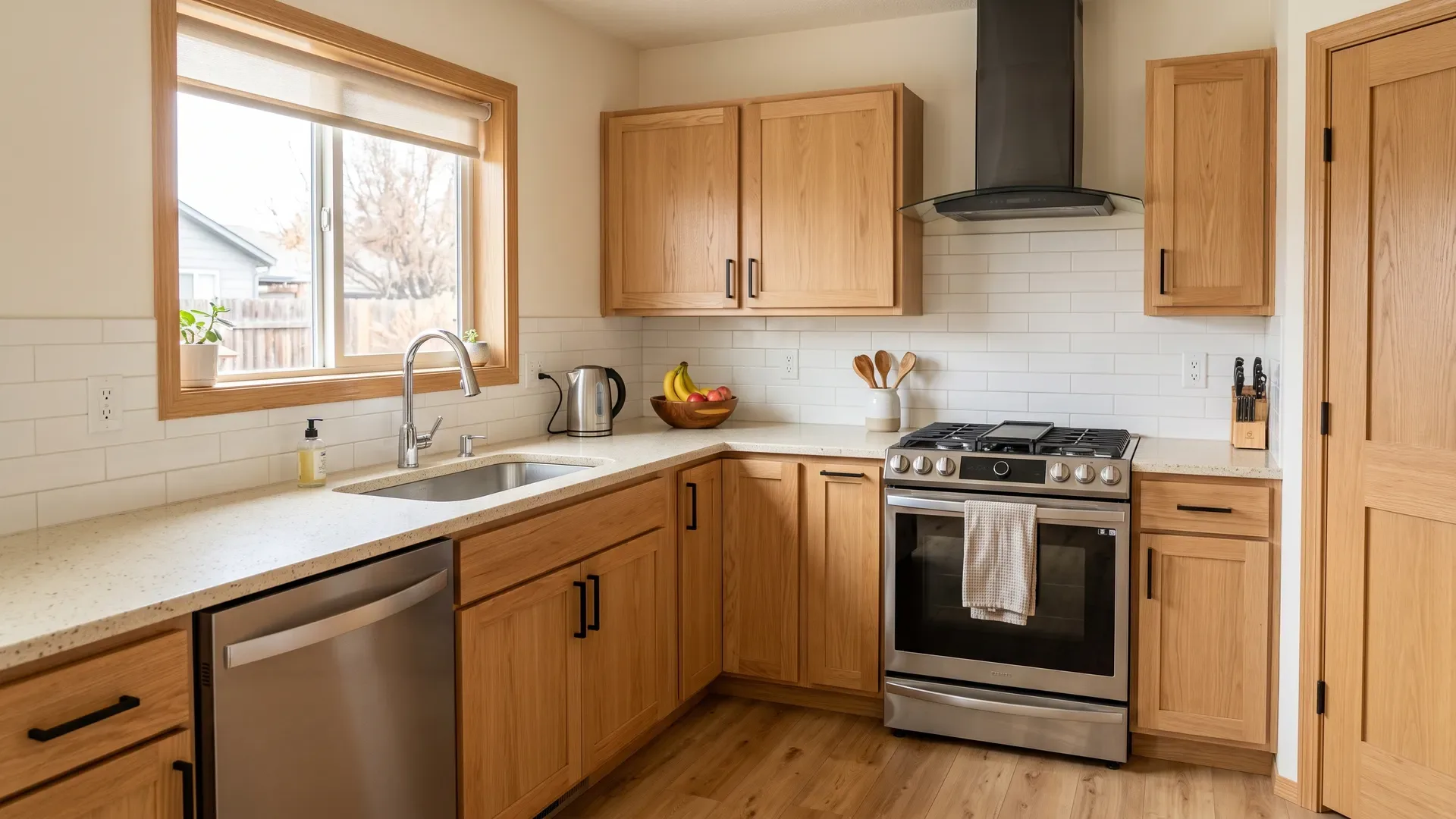
RTA cabinets are "ready-to-assemble" cabinets: they ship flat in a box and you (or an installer) put them together on site with included dowels, cam locks, and screws. They are popular because flat-packing dramatically lowers shipping and storage costs, so RTA is usually cheaper than pre-assembled stock and far cheaper than custom. The trade-off is your time and skill to assemble them, fixed sizes that may not fit your space perfectly, and quality that varies widely by supplier. RTA can be a smart budget choice for a standard layout and a handy homeowner; for a precise fit, a specific look, or a forever kitchen, custom is usually the better long-term value.
Key takeaways: RTA = flat-pack cabinets you assemble yourself to save money. Best for tight budgets, standard layouts, and DIY-comfortable homeowners. Quality ranges from excellent to disappointing, so inspect the box, drawers, and hinges. For exact fit and premium construction, compare against custom cabinets. Get a planning range.
What does RTA mean?
Tap to expand
What does RTA mean?
RTA stands for ready-to-assemble. Instead of arriving as finished boxes, RTA cabinets come as a kit of flat panels, doors, drawer parts, and a bag of hardware, packed tightly in a carton. You assemble each cabinet before it goes on the wall, typically using pre-drilled holes and a combination of dowels, cam-lock connectors, screws, and glue. Once assembled, a good RTA cabinet looks and functions much like a pre-built one - the difference is simply where and when the assembly happens.
The model exists because shipping air is expensive. A finished cabinet is mostly empty space, so it costs a lot to box, ship, and warehouse. Flattening it into a compact kit slashes those costs, and RTA suppliers pass some of that savings to you. That is the entire value proposition: you trade a few hours of assembly for a lower price.
The advantages of RTA cabinets
Tap to expand
The advantages of RTA cabinets
RTA has real strengths, and for the right project they add up. The most obvious is price: because you are not paying for factory assembly or bulky shipping, RTA typically undercuts comparable pre-assembled stock cabinets. Availability is another plus - many RTA lines are in stock and ship quickly, which suits a tight timeline or a rental turnover. Flat boxes are also easier to carry through doorways and up stairs than fully built cabinets, and if you enjoy hands-on projects, assembling your own cabinets can be genuinely satisfying. For a budget-conscious kitchen with a standard layout, RTA can deliver a clean, updated look for meaningfully less money.
The drawbacks to weigh
Tap to expand
The drawbacks to weigh
The savings come with honest trade-offs. First is your time and skill: assembling a full kitchen of cabinets is hours of careful work, and a cabinet that is assembled out of square will hang crooked and never quite look right. Second is fit - like all stock cabinets, RTA comes in fixed sizes, so gaps between the cabinets and your real walls get covered with filler strips rather than a true custom fit. Third is quality variability, which is the big one: RTA spans everything from solid plywood boxes with dovetailed drawers to flimsy particleboard held together with staples. Two RTA kitchens at similar prices can be worlds apart in how long they last. Finally, if something arrives damaged or a panel is mis-drilled, you are often the one managing the fix, without the accountability of a local company that measured, built, and installed the kitchen.
How to judge RTA quality
Tap to expand
How to judge RTA quality
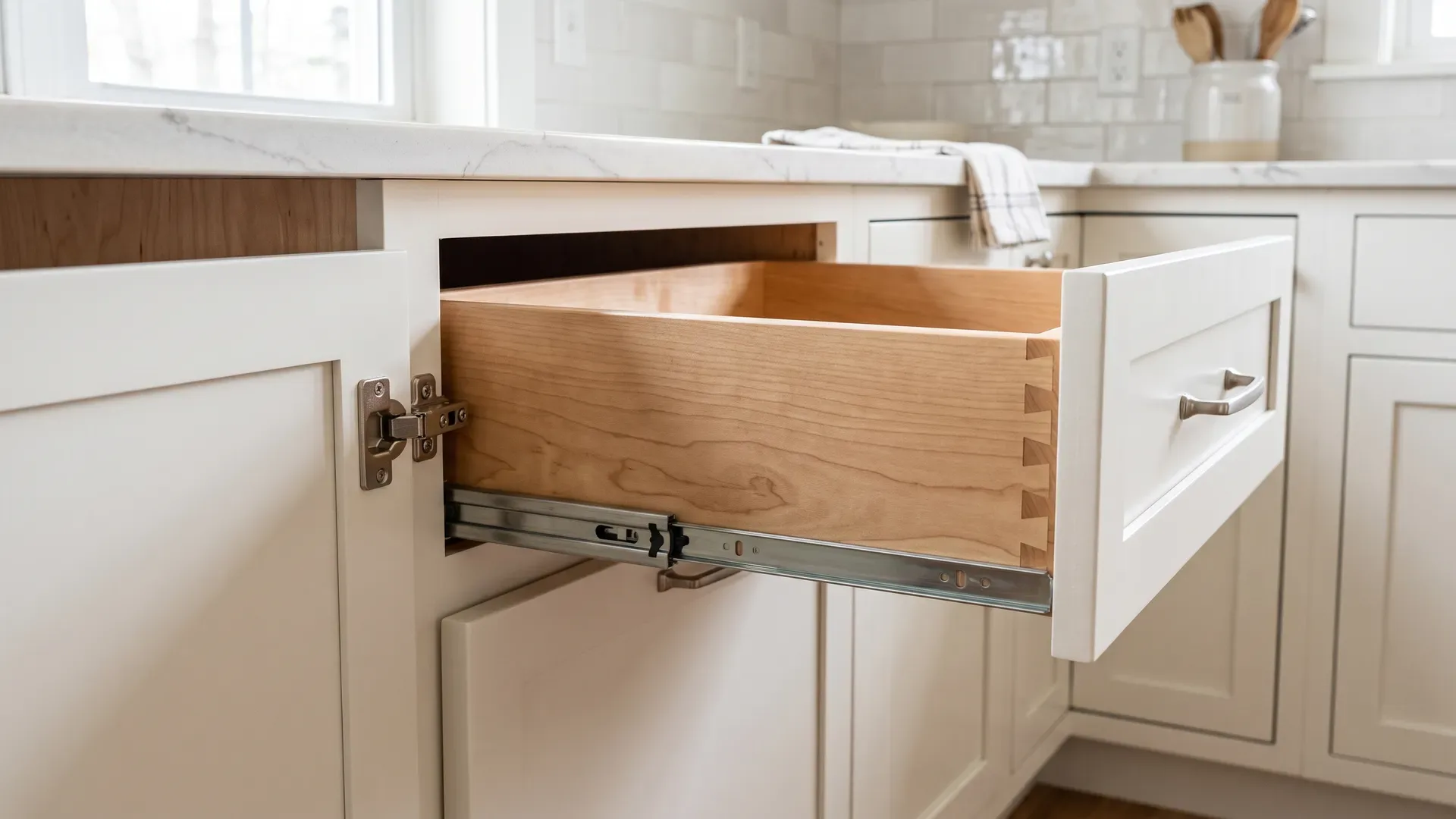
Because RTA quality varies so much, inspecting it matters more than with almost any other cabinet. Look for a 3/4-inch plywood box rather than thin particleboard, solid-wood dovetailed drawer boxes on full-extension soft-close glides, and adjustable soft-close hinges. Read reviews specifically about assembly - do the parts line up, are the pre-drilled holes accurate, is the hardware decent? A cheap RTA kit that fights you during assembly and sags within a year is not a bargain. Our full cabinet construction quality guide walks through exactly what to check, and it applies directly to evaluating any RTA line.
RTA vs pre-assembled vs custom
Tap to expand
RTA vs pre-assembled vs custom
| Factor | RTA | Pre-assembled stock | Custom |
|---|---|---|---|
| Price | Lowest | Low-mid | Highest |
| Assembly | You do it | Done | Done, installed by the builder |
| Fit | Fixed sizes + fillers | Fixed sizes + fillers | Exact |
| Quality | Varies widely | Varies | Best, your spec |
| Lead time | Fast | Fast | Longest |
| Best for | DIY, budget, standard layout | Budget, no assembly | Forever homes, odd spaces |
Who should buy RTA?
Tap to expand
Who should buy RTA?
RTA makes the most sense for a specific kind of project. If you are updating a rental, flipping a house, finishing a garage or laundry room, or working with a tight budget and a standard kitchen footprint, RTA can be a genuinely smart choice - especially if you or someone you trust is comfortable with careful assembly. It is less ideal if your walls are out of square, your ceilings are tall, you want a particular finish or two-tone look, or you simply do not want to spend a weekend building cabinets. In those cases, the money you save on RTA is often spent back in filler gaps, compromises, and the labor of assembly.
What assembling RTA actually involves
Tap to expand
What assembling RTA actually involves
If you go the RTA route, plan for the reality of assembly. Each cabinet typically takes 20 to 45 minutes once you find a rhythm, and a full kitchen is a substantial project spread over a weekend or more. You will need basic tools, a clean flat workspace, patience, and care to keep every box perfectly square - a carpenter's square and a rubber mallet are your friends. Label parts, follow the instructions in order, and dry-fit before gluing. Rushing is where RTA kitchens go wrong: a box assembled slightly out of square throws off the doors and the whole run. Done patiently, though, quality RTA can look indistinguishable from pre-built once it is on the wall.
What RTA cabinets cost
Tap to expand
What RTA cabinets cost
RTA is generally the least expensive way to get new cabinets, often running well below pre-assembled stock and a fraction of custom. But remember that the sticker price is only part of the story: factor in your time to assemble, any tools you need, filler strips, and installation if you are not doing that yourself. And weigh the long game - a cheaper cabinet that wears out or sags in a few years costs more than a well-built one that lasts twenty. For how RTA fits against other options in our market, see the Boise cabinet cost guide and our comparison of stock vs custom cabinets.
The bottom line on RTA
Tap to expand
The bottom line on RTA
RTA cabinets are a legitimate, budget-friendly option that trades your time and a perfect fit for a lower price. For a standard layout, a modest budget, and a homeowner who does not mind assembly, they can deliver a clean, updated kitchen for real savings. But RTA is not automatically a good deal - quality ranges from excellent to poor, and the cheapest kits often disappoint. If your space is tricky, your vision is specific, or you plan to stay in the home for years, the exact fit, premium construction, and single accountable team of a custom kitchen usually deliver more satisfaction and better long-term value. The right answer depends on your budget, your layout, and how much the fit and finish matter to you every day.
Where RTA cabinets are sold
Tap to expand
Where RTA cabinets are sold
RTA cabinets come mostly from online retailers and some home centers, and the buying experience is very different from working with a local cabinet company. Online, you browse a catalog, choose door styles and sizes, and place an order that arrives on a freight truck in a stack of flat boxes. There is no one measuring your kitchen, no designer catching that a cabinet will collide with your window trim, and no installer accountable for the finished result. That do-it-yourself model is exactly why RTA is cheaper, and it works fine for a confident homeowner with a straightforward layout. But it also means the responsibility for measuring correctly, ordering the right sizes, handling any damaged or mis-drilled parts, and assembling everything square falls on you. If a piece shows up wrong, you are filing a claim and waiting on a replacement rather than calling a local team that will make it right. For some homeowners that trade-off is worth the savings; for others, the peace of mind of a single accountable company is worth paying more for. Knowing which kind of project and which kind of person you are is the key to a happy RTA experience.
Finishing, durability, and the long view
Tap to expand
Finishing, durability, and the long view
One detail that surprises RTA buyers is finishing. Many RTA lines arrive already finished, but the finish quality varies as much as the construction, and a thin or unevenly applied finish will show wear sooner around the sink and range where hands and moisture do their work. Before you buy, look closely at a sample or read reviews focused on how the finish holds up over a year or two of real cooking, not just how it looks on day one. Durability overall is the theme with RTA: a well-made kit with plywood boxes, dovetailed drawers, and a quality finish can serve a kitchen faithfully for many years, while a bargain kit of stapled particleboard can start sagging and chipping within a couple of seasons. The cheapest RTA is rarely the best value, because a cabinet you replace in five years costs far more than one that lasts twenty. When you compare an inexpensive RTA option against a custom quote, weigh the full lifespan, not just the opening price, and be honest about how long you intend to keep the kitchen. That single question - how long will I live with this - resolves most RTA-versus-custom decisions on its own.
Considering custom instead? Talk to Boise Cabinet Co
Tap to expand
Considering custom instead? Talk to Boise Cabinet Co
If you want the exact-fit, built-to-last alternative to RTA, Boise Cabinet Co designs, builds, and installs custom cabinets for kitchens, bathrooms, and built-ins across Boise, Meridian, Eagle, and Nampa - no assembly required and no filler-gap compromises. Compare our cabinets, then get an instant planning range or book a free in-home consultation.