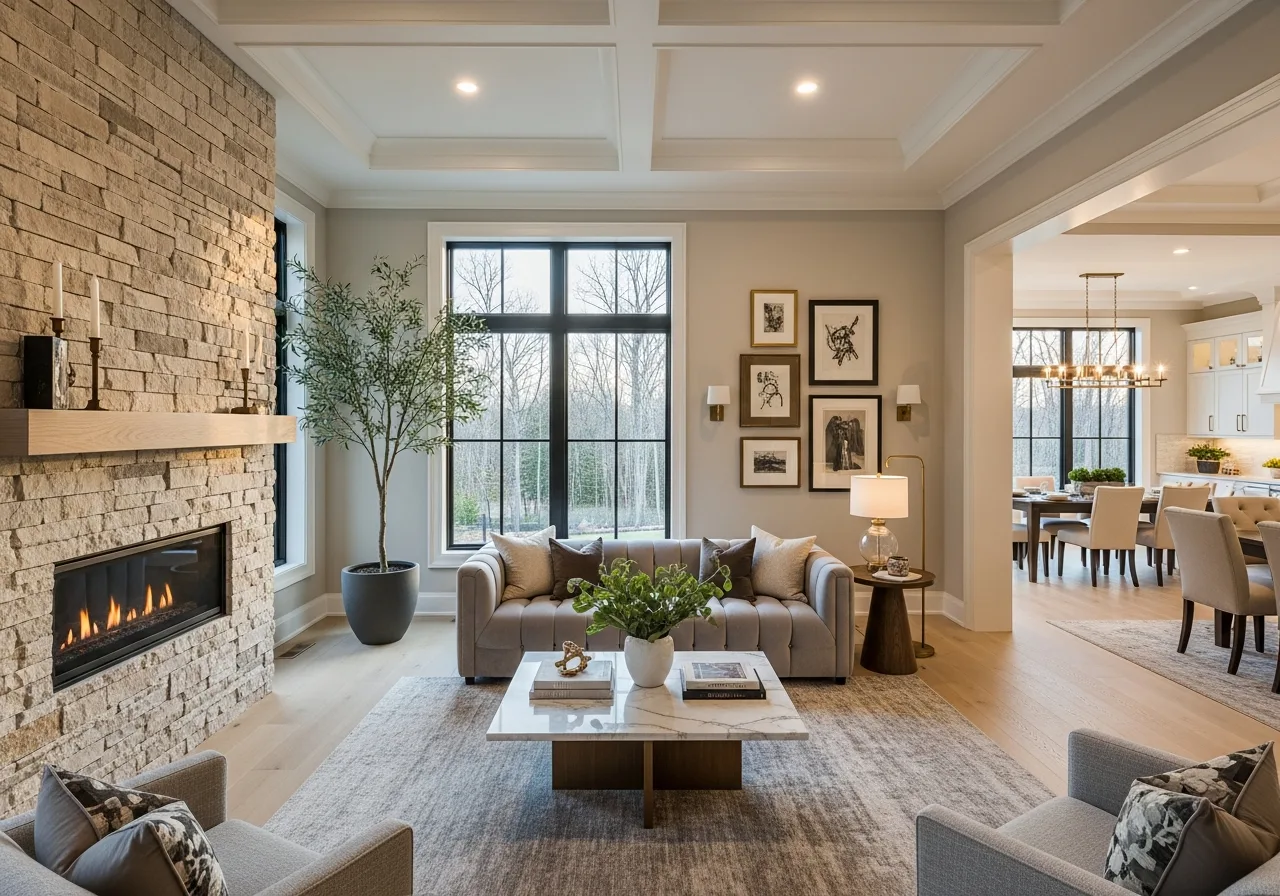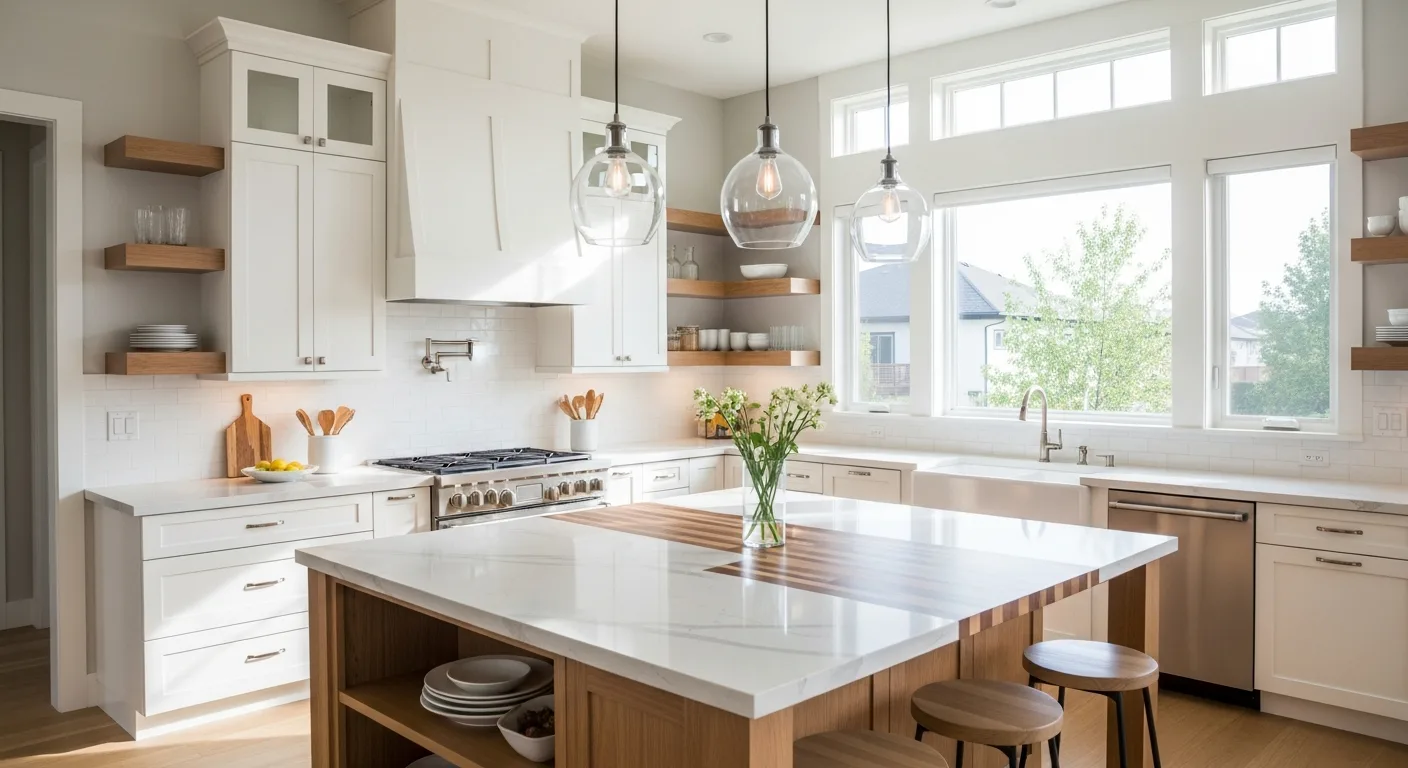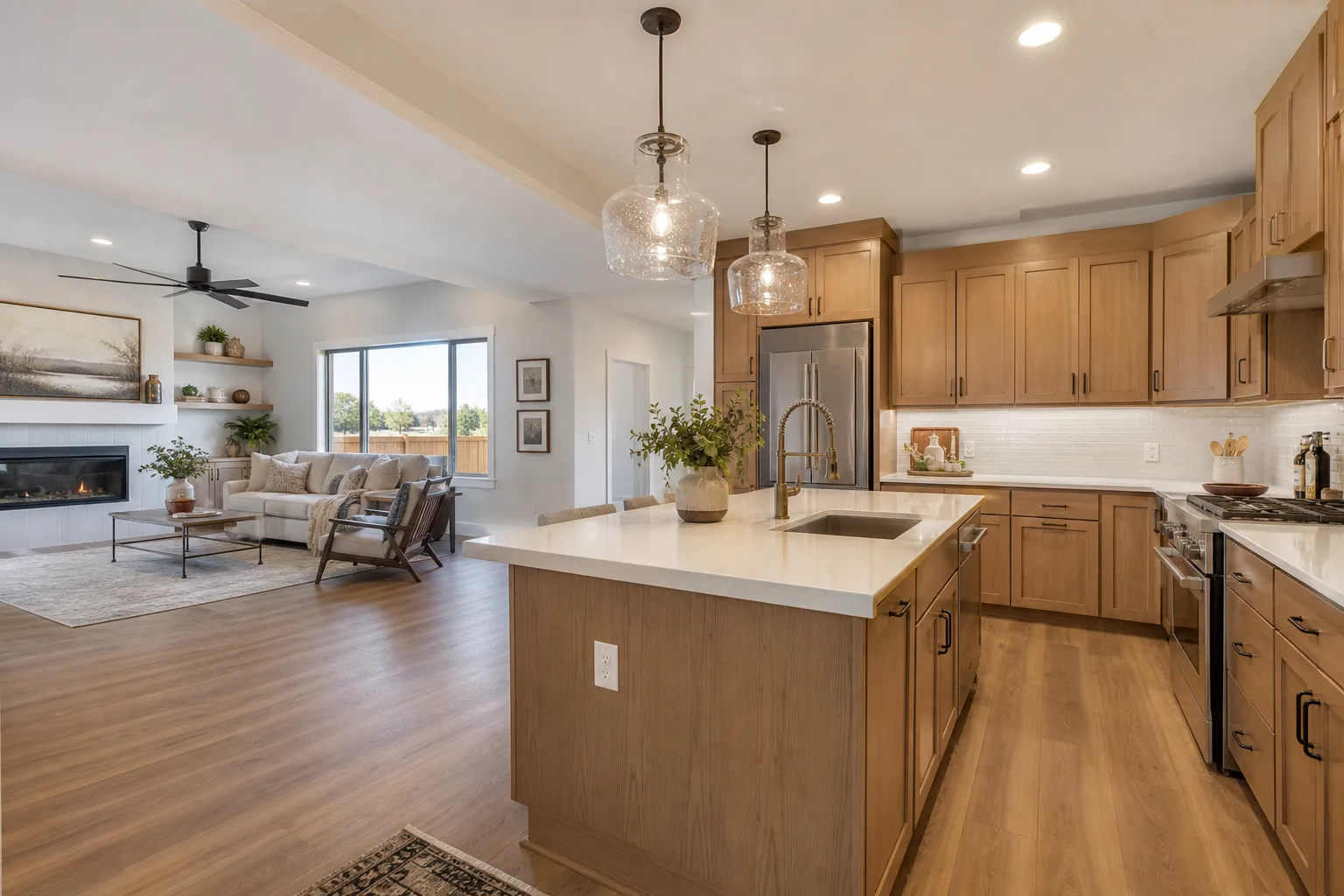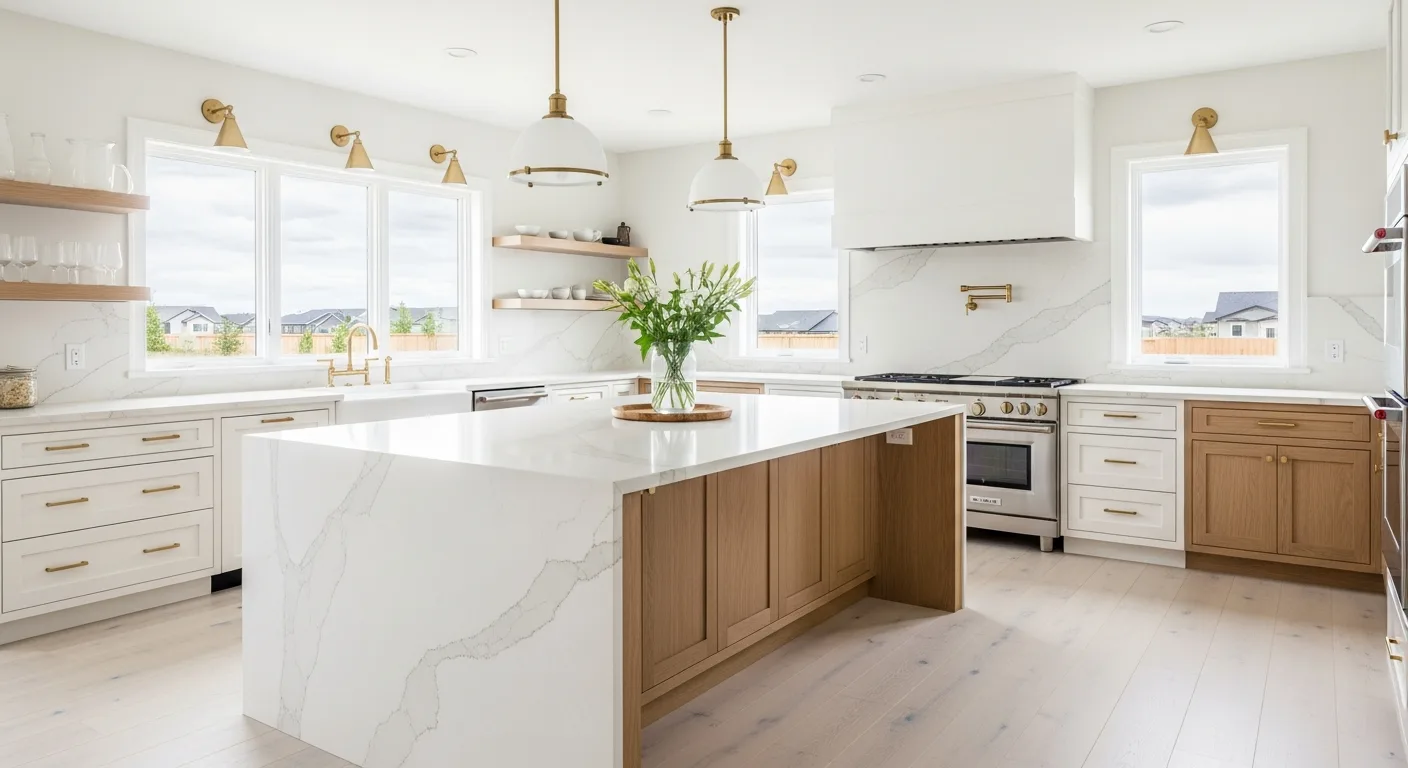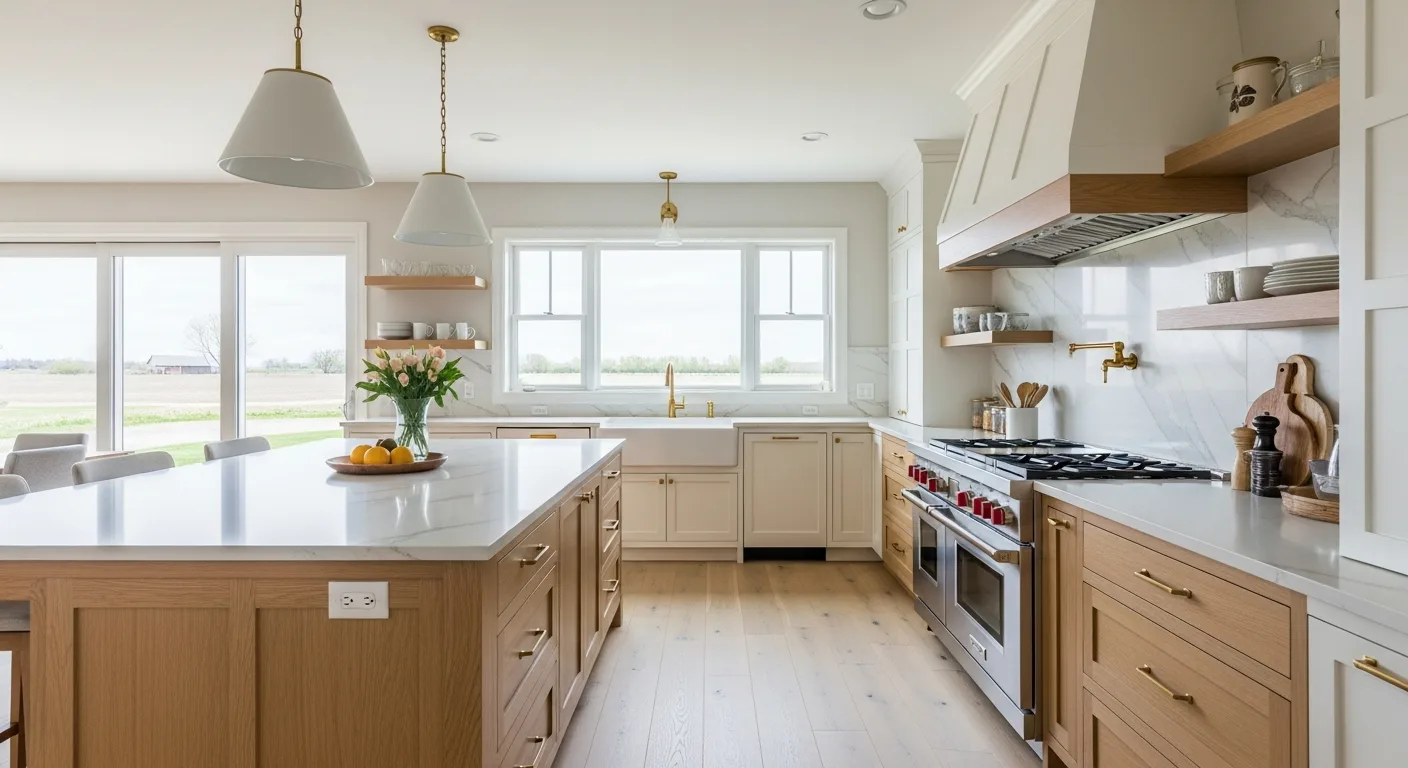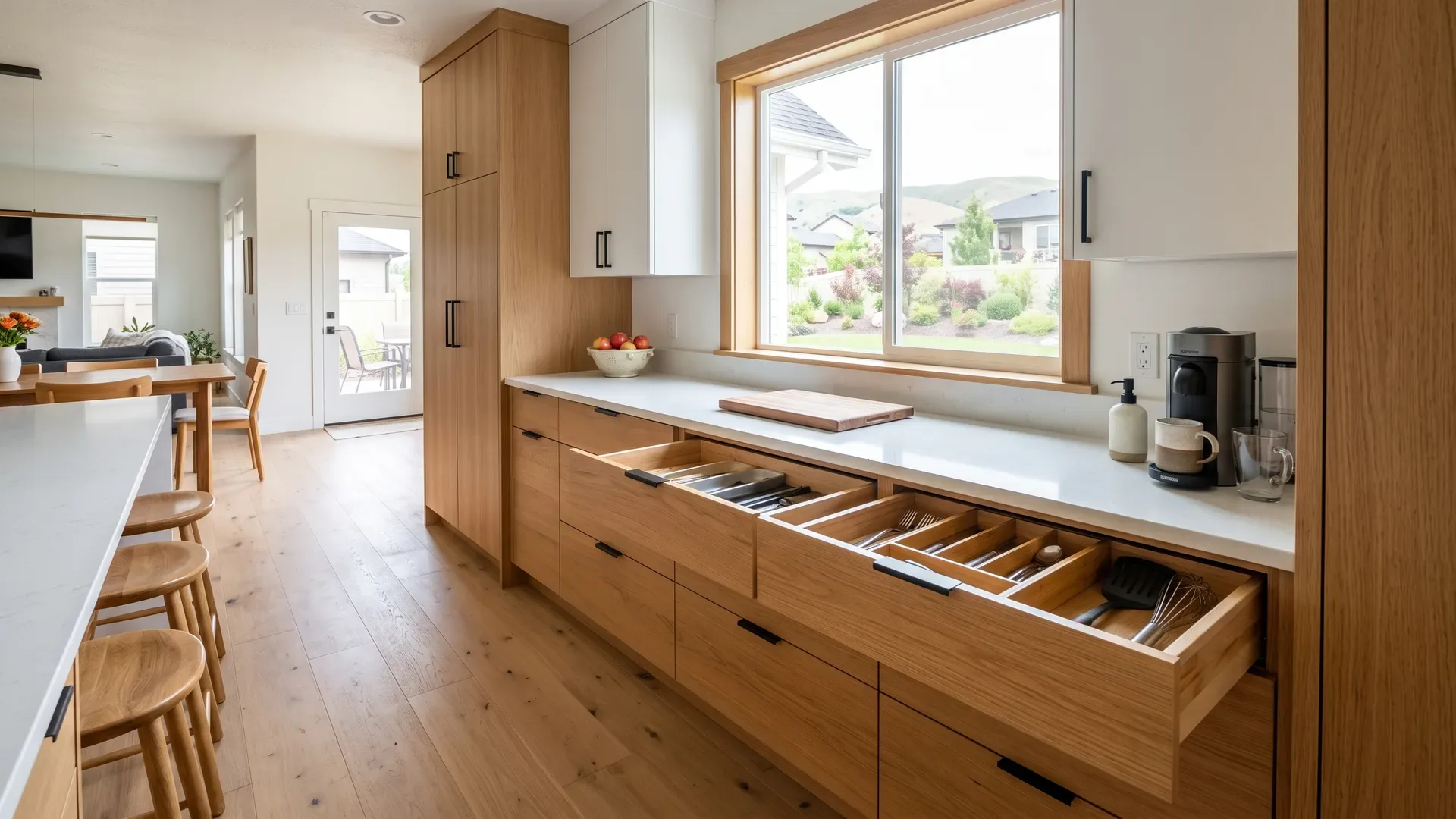
Framed cabinets have a face frame (a border of solid wood) across the front of the box; frameless cabinets, also called European or full-access cabinets, skip the frame so doors mount directly to the box. The practical result: frameless gives you wider drawers, easier reach, and a cleaner modern look, while framed offers a classic profile and slightly more racking rigidity. For most Treasure Valley kitchens that want maximum storage and a contemporary feel, frameless wins.
Key takeaways: Frameless = ~10–15% more usable space, full drawer access, and seamless modern lines. Framed = traditional face-frame look and a familiar repair path. Build quality (box material, drawer boxes, hinges) matters more than the frame debate itself. Get a planning range in about a minute.
What are framed cabinets?
Tap to expand
What are framed cabinets?
A framed cabinet has a face frame, usually 1.5-inch-wide solid hardwood, attached to the front edges of the cabinet box. Doors and drawer fronts attach to that frame. This is the traditional American construction method, and it is what most big-box and stock lines still use.
Because the frame adds a rigid border, framed boxes tolerate out-of-square walls well and give installers a solid surface to shim and fasten against. The trade-off is that the frame narrows the opening, so drawers and pull-outs are a little smaller than the full box width, and you get a center stile on many double-door cabinets that can interrupt access.
Overlay options on framed cabinets
- Standard (partial) overlay: doors cover part of the frame; you see a border of frame around each door. Most budget-friendly.
- Full overlay: doors cover nearly all of the frame for a near-frameless look while keeping framed construction.
- Inset: doors sit flush inside the frame for a furniture-grade, traditional aesthetic (and a higher price).
What are frameless (European) cabinets?
Tap to expand
What are frameless (European) cabinets?
Frameless cabinets, the style we build at Boise Cabinet Co, omit the face frame entirely. The box is engineered from thicker panels (typically 3/4-inch), and doors mount to the sides of the box with concealed, adjustable hinges. This is why you will also hear the terms European cabinets, full-access cabinets, or frameless construction.
Without a frame stealing an inch and a half on each side, the entire box opening is usable. Drawers run nearly wall-to-wall, roll-outs are wider, and there is no center stile blocking a double-door cabinet. The look is clean and contemporary, which pairs naturally with slab and Shaker door styles and the flat, seamless runs homeowners want in a modern kitchen.
Frameless construction typically returns 10–15% more usable cabinet space than a comparable framed layout, most noticeable in drawer banks and corner cabinets.
Framed vs frameless: side-by-side comparison
Tap to expand
Framed vs frameless: side-by-side comparison
| Factor | Framed cabinets | Frameless (European) |
|---|---|---|
| Usable interior space | Good (frame narrows openings) | Best (full box width) |
| Drawer & roll-out width | Narrower | Wider, near full-width |
| Look | Traditional, transitional | Clean, modern, seamless |
| Door overlay options | Partial, full, or inset | Full overlay (standard) |
| Structural rigidity | Frame adds racking strength | Thicker box panels compensate |
| Install on out-of-square walls | Very forgiving | Forgiving with quality install |
| Typical cost | $ – $$ | $$ – $$$ (build-dependent) |
| Best for | Classic, farmhouse, traditional homes | Modern, transitional, storage-first kitchens |
Pros and cons at a glance
Tap to expand
Pros and cons at a glance
Frameless pros
- Maximum usable space and full-access drawers
- Clean, modern, seamless sightlines across a run
- No center stile blocking double-door cabinets
- Easier to reach the back of base cabinets
Frameless considerations
- Requires precise fabrication and installation to look its best
- Often a higher entry price than stock framed lines
Framed pros
- Familiar traditional look, especially with inset doors
- Very forgiving on older, out-of-square Treasure Valley homes
- Widely available at every price point
Framed considerations
- Frame reduces interior width and drawer capacity
- Center stiles can interrupt access on some cabinets
Which is right for your kitchen?
Tap to expand
Which is right for your kitchen?
The frame debate matters less than most homeowners expect, what actually drives daily satisfaction is box material, drawer-box construction, and hinge quality. That said, use this quick checklist to point yourself in the right direction:
- ☐ You want the most storage possible from the same footprint → frameless
- ☐ You love a clean, modern or transitional look → frameless
- ☐ You are matching a historic or farmhouse aesthetic with inset doors → framed
- ☐ You want wide, full-extension drawers in the base run → frameless
- ☐ You are on the tightest possible budget with stock cabinets → framed
Our take: For new custom kitchens in Boise, Meridian, and across the Treasure Valley, we build frameless because homeowners consistently value the extra space and modern lines, without giving up durability. See how we engineer our boxes on the construction page.
The storage math: what 10–15% really means
Tap to expand
The storage math: what 10–15% really means
On a typical 12-foot base run, switching from framed to frameless can add several inches of usable width per cabinet. In day-to-day terms that is room for an extra stack of dinner plates, a wider utensil drawer, or a deep pot drawer that actually fits your stockpot. In corner cabinets, frameless openings make blind-corner pull-outs and lazy Susans easier to load and reach because there is no frame lip to fight. For families who cook every day, that reclaimed space is often the difference between a kitchen that feels cramped and one that finally works, without changing your footprint or moving a single wall.
What actually determines cabinet quality
Tap to expand
What actually determines cabinet quality
Homeowners often fixate on framed versus frameless when the features that decide how a kitchen holds up over 15 to 20 years live elsewhere. Before you sign a quote, look past the frame and compare these four things:
- Box material: furniture-grade plywood resists moisture and holds screws better than particleboard or thin MDF, which matters through Idaho's dry winters and swingy shoulder seasons.
- Drawer boxes: solid-wood, dovetailed drawer boxes on full-extension, soft-close undermount glides outlast stapled particleboard drawers by years.
- Hinges: six-way adjustable, soft-close concealed hinges keep doors aligned and quiet and make future adjustments painless.
- Joinery and back panels: dowel or dado joinery and a full 3/4-inch back panel keep boxes square and let installers anchor securely into studs.
Pro tip: When comparing two quotes, ask for the box material, drawer-box construction, and hinge brand in writing. Those three lines predict long-term satisfaction far better than whether a cabinet has a face frame. Our construction standards spell all of this out before fabrication.
Common myths about frameless cabinets, debunked
Tap to expand
Common myths about frameless cabinets, debunked
A few persistent myths steer homeowners away from frameless for the wrong reasons. Here is what is actually true:
- Myth: frameless is less sturdy. Reality: frameless boxes use thicker panels and rigid joinery to replace the frame's strength, so a quality frameless cabinet is every bit as durable.
- Myth: frameless only works in ultra-modern kitchens. Reality: with a Shaker door and the right finish, frameless reads transitional or even classic while still giving you full access.
- Myth: frameless is always more expensive. Reality: price is driven by materials, finish, and accessories; a mid-range frameless kitchen can land near a comparable framed one.
- Myth: frameless is hard to install in old homes. Reality: an experienced installer scribes and shims frameless cabinets cleanly, even in century-old Boise bungalows with out-of-square walls.
Cost differences
Tap to expand
Cost differences
Frameless and framed can overlap heavily in price; the bigger cost drivers are materials, finish, hardware, and layout complexity, not the frame alone. Entry-level stock cabinets (usually framed) are the cheapest, while custom frameless with premium finishes and accessories sits at the higher end. For a detailed breakdown of what moves the number in our market, see our Boise cabinet cost guide, and read stock vs custom cabinets if you are weighing lines.
Industry resources like the National Kitchen & Bath Association (NKBA) and Forbes Home track national remodeling costs, but local labor, delivery, and finish availability shift the real Treasure Valley range, which is exactly what your in-home consultation confirms.
Frameless cabinets in older vs newer Treasure Valley homes
Tap to expand
Frameless cabinets in older vs newer Treasure Valley homes
Boise's North End and older Nampa and Caldwell neighborhoods are full of charming homes with walls that are anything but plumb. Frameless cabinets install beautifully in these spaces when the crew scribes fillers and levels the run properly, and you still gain the full-access storage that older, smaller kitchens badly need. In newer construction across Meridian, Eagle, Star, and Kuna, frameless is the natural match for the open-concept, clean-line kitchens builders and buyers want today. Either way, the deciding factor is a careful measure and a written plan, not the age of the house.
How to decide in 5 steps
Tap to expand
How to decide in 5 steps
- Define your look. Modern or transitional leans frameless; classic and historic can go either way, with inset framed as the premium traditional option.
- Prioritize storage. If you cook often or have a small kitchen, the extra frameless capacity pays off every single day.
- Set a realistic budget. Decide door style, finish, and accessories first; those move the price more than the frame.
- Vet construction. Compare box material, drawer boxes, and hinges across quotes, in writing.
- Get a measured plan. A free in-home consultation turns your space and wish list into an accurate scope and planning range.
Want a shortcut? Try our style finder to narrow door styles and finishes, then send your favorites along with your estimate request.
How we build frameless cabinets in the Treasure Valley
Tap to expand
How we build frameless cabinets in the Treasure Valley
Boise Cabinet Co designs, builds, and installs frameless custom cabinets for kitchens, bathrooms, and built-ins throughout Boise, Meridian, Eagle, and Nampa. Every project starts with a free in-home design consultation and a written scope before fabrication, so what you approve is what we build. Explore door styles, finishes in the catalog, and hardware to see how the frameless look comes together, then browse the full cabinet catalog.
Ready to price your project? Get an instant planning range or schedule your free consultation and we will reach out within one business day.