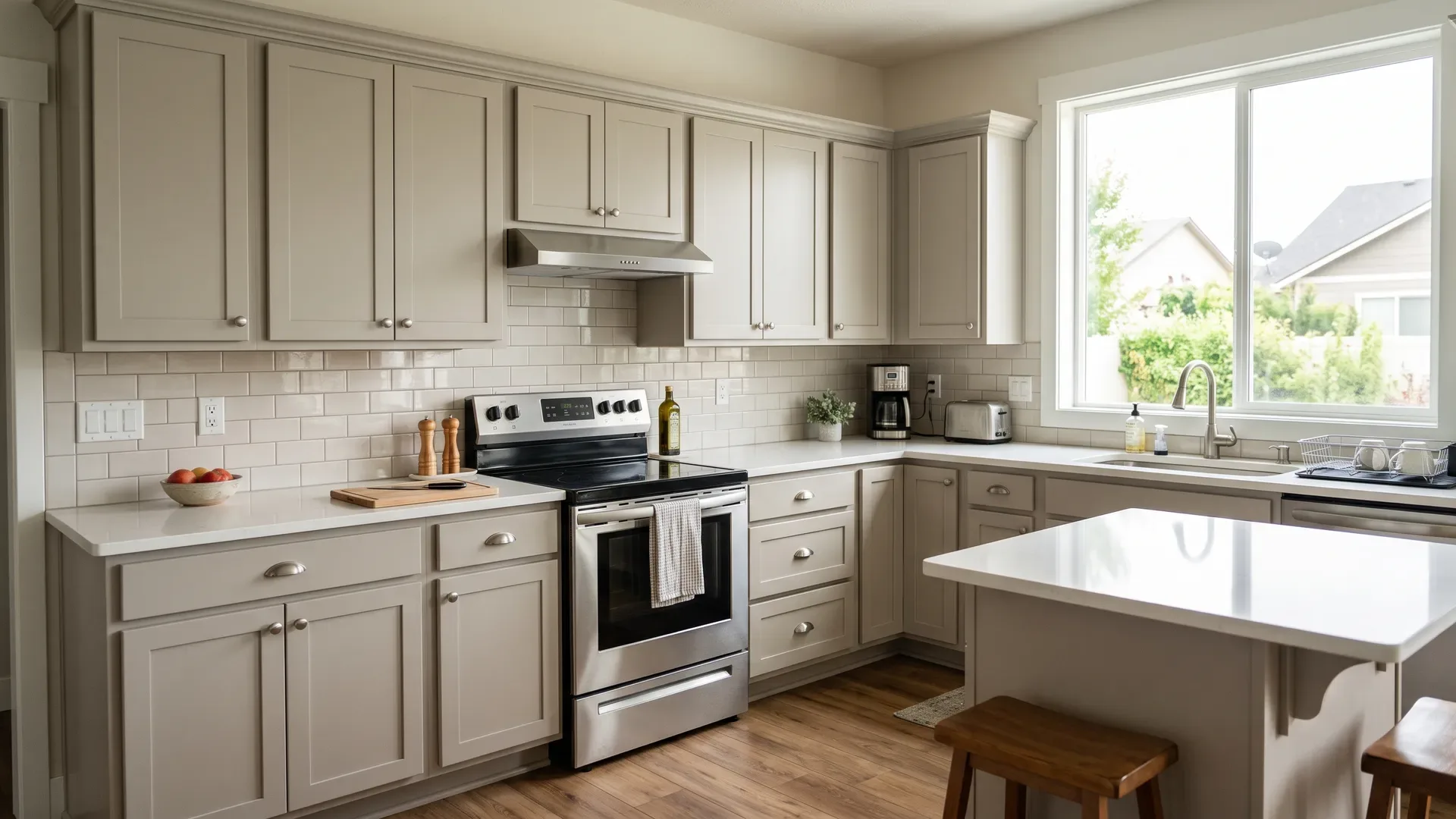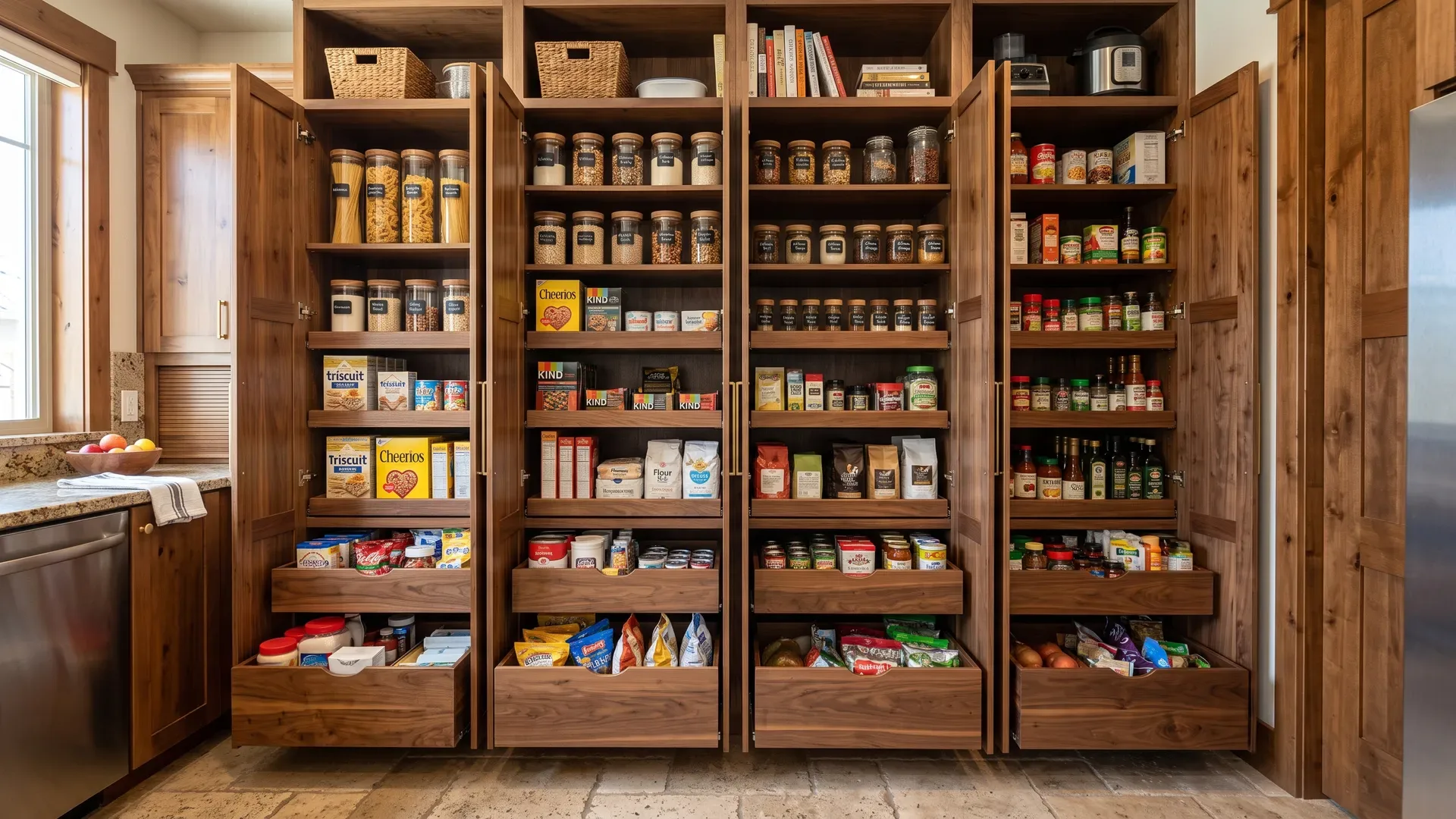
The best pantry cabinet is one where nothing hides in the back - which means shallow adjustable shelves, roll-out trays, door-mounted racks, and clear zones for each category of food. Whether you have a dedicated tall pantry cabinet, a wall of built-in pantry cabinetry, or a small closet, the same principles apply: use the full height, keep everything visible and reachable, and group items so you can see at a glance what you have. Below are the pantry cabinet ideas and storage solutions that turn a cluttered catch-all into a pantry that actually works.
Key takeaways: Great pantries keep everything visible - shallow shelves, roll-outs, and door racks beat deep dark shelves. Use the full height, zone by category, and plan pull-outs into new cabinetry. See storage accessories or plan your project.
Types of pantry cabinets
Tap to expand
Types of pantry cabinets
"Pantry" covers several very different setups, and the right ideas depend on which you have. A tall pantry cabinet is a single floor-to-ceiling cabinet, usually 84 to 96 inches tall, that packs enormous storage into a small footprint. A built-in pantry wall uses a run of tall cabinets, sometimes with a counter and uppers, to create a dedicated food-storage zone. A walk-in pantry is a small room lined with shelving or cabinetry. And a pull-out or slide-out pantry is a narrow tall cabinet that rolls fully out of a gap beside the fridge or range. Each solves the same problem - keeping food organized and reachable - but a tall cabinet and a pull-out are the two that make the most of limited kitchen space, which is why they are so popular in new cabinetry.
The golden rule: nothing in the back
Tap to expand
The golden rule: nothing in the back
The single biggest reason pantries become chaotic is depth. Deep, fixed shelves swallow everything at the back, so cans and boxes get lost, expire, and get rebought. The fix is to make sure every item is visible and reachable from the front. That means favoring shallower shelves where you can see the whole depth, using roll-out trays so the back comes to you, and adding door-mounted racks for the items that always vanish. If you are planning a new pantry cabinet, designing it around visibility from the start - with pull-outs instead of deep static shelves - is the difference between a pantry you love and one you dread opening.
Roll-out shelves and pull-outs
Tap to expand
Roll-out shelves and pull-outs
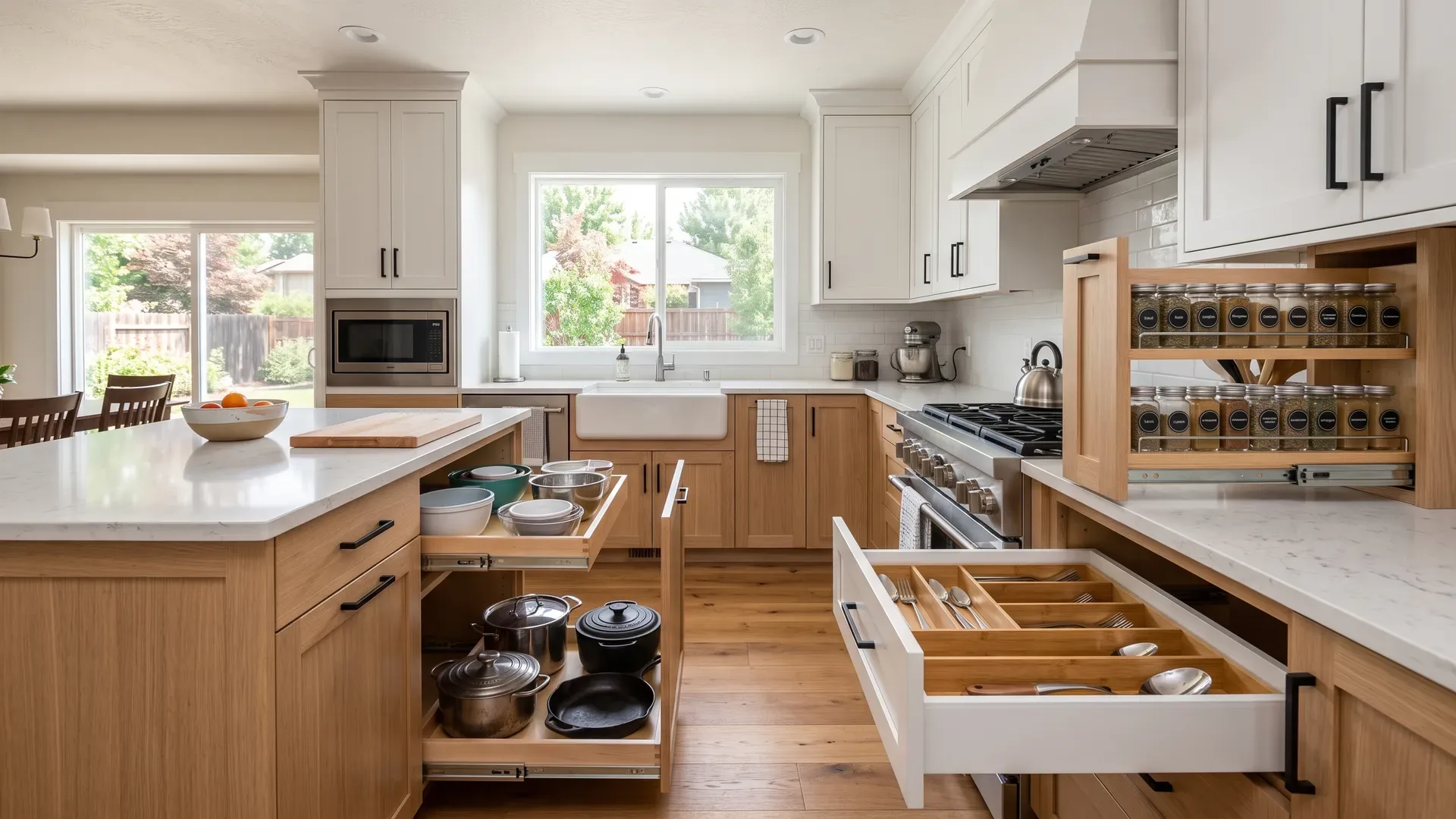
Roll-out shelves are the highest-impact pantry upgrade there is. Instead of reaching into a dark cabinet and shuffling cans to find what you need, you pull the whole shelf out and see everything at once. In a tall pantry cabinet, a stack of roll-out trays turns the entire cabinet into fully accessible storage from top to bottom. A narrow pull-out pantry - a tall, skinny cabinet on heavy-duty slides - is a brilliant way to reclaim a slim gap beside the fridge or oven, storing rows of cans and bottles that glide out into view. If you are building or renovating, roll-outs are the accessory most worth the money in a pantry, because they solve the exact problem that makes pantries frustrating. See our cabinet accessories for options.
Zone your pantry by category
Tap to expand
Zone your pantry by category
Just like the rest of the kitchen, a pantry works best when it is organized into zones. Group like with like - baking supplies together, canned goods together, snacks together, breakfast items together, backstock in one place - and give each category a defined home. When everything has a zone, you can see at a glance what you are low on, you stop buying duplicates, and putting groceries away becomes automatic instead of a puzzle. Put the things you reach for daily at eye level and the occasional or bulk items up high or down low. A zoned pantry is easier to keep tidy precisely because every item has an obvious place to go back to.
Use the full height
Tap to expand
Use the full height
Pantries are often tall, and the space up high and down low is where storage is won or lost. Adjustable shelving is essential: set the shelves to the actual height of your items so you are not wasting six inches of air above every row. Reserve the highest shelves for lightweight, rarely used items like seasonal bakeware or backstock, and keep a small step stool nearby. Down low, roll-out drawers or bins handle heavy items like bags of flour, cases of water, or small appliances. Using the full vertical space with adjustable shelves and a mix of roll-outs is how a modestly sized pantry cabinet ends up holding far more than you would expect.
Don't waste the door
Tap to expand
Don't waste the door
The inside of a pantry door is prime real estate that most people ignore. Door-mounted racks - shallow wire or wood shelves attached to the back of the door - are perfect for the small items that always get buried: spices, oils, sauces, foil and wrap boxes, and snack packets. Because they are shallow and everything faces you, nothing hides. In a custom pantry cabinet, building slim door storage into the design adds a surprising amount of usable, fully visible space without taking up any additional footprint. It is one of the easiest ways to make a pantry hold more while staying organized.
Containers, labels, and clear storage
Tap to expand
Containers, labels, and clear storage
Transferring staples like flour, sugar, pasta, rice, cereal, and snacks into clear airtight containers does two things: it keeps food fresh and pest-free, and it makes the pantry instantly readable so you can see exactly how much of everything you have. Uniform containers also stack and line up neatly, turning a jumble of half-open bags and boxes into tidy rows. Add simple labels and you never have to guess what is in a jar or dig for the pasta. You do not need to container everything - but doing it for your most-used dry goods has an outsized effect on how organized and calm the pantry feels day to day.
Pantry ideas for small kitchens
Tap to expand
Pantry ideas for small kitchens
No room for a walk-in? Small kitchens have great pantry options. A single tall pantry cabinet delivers enormous storage in a two-foot footprint. A pull-out pantry reclaims a narrow gap beside the fridge or range that would otherwise be dead space. Even a standard cabinet can become a mini-pantry with roll-out trays and door racks added. The trick in a small kitchen is to go vertical and go visible: use the full height, choose pull-outs so nothing hides, and dedicate one well-organized cabinet to food rather than scattering it across the kitchen. A compact pantry that is well designed beats a big one that is a mess. See our related guidance on cabinet sizes.
Why a custom pantry beats a retrofit
Tap to expand
Why a custom pantry beats a retrofit
You can improve almost any pantry with add-on organizers, but a pantry designed as custom cabinetry from the start is on another level. When we build a pantry cabinet, the roll-outs, door storage, adjustable shelving, and interior dimensions are planned around what you actually store and how you cook - the depths are right, the pull-outs are heavy-duty and full-extension, and the whole thing is built to the exact height of your space so no inch is wasted. Retrofit organizers help, but they are always working around a cabinet that was not designed for them. A purpose-built pantry simply holds more, wastes less, and stays organized with less effort, which is why it is one of the most-loved parts of a custom kitchen.
Materials and durability
Tap to expand
Materials and durability
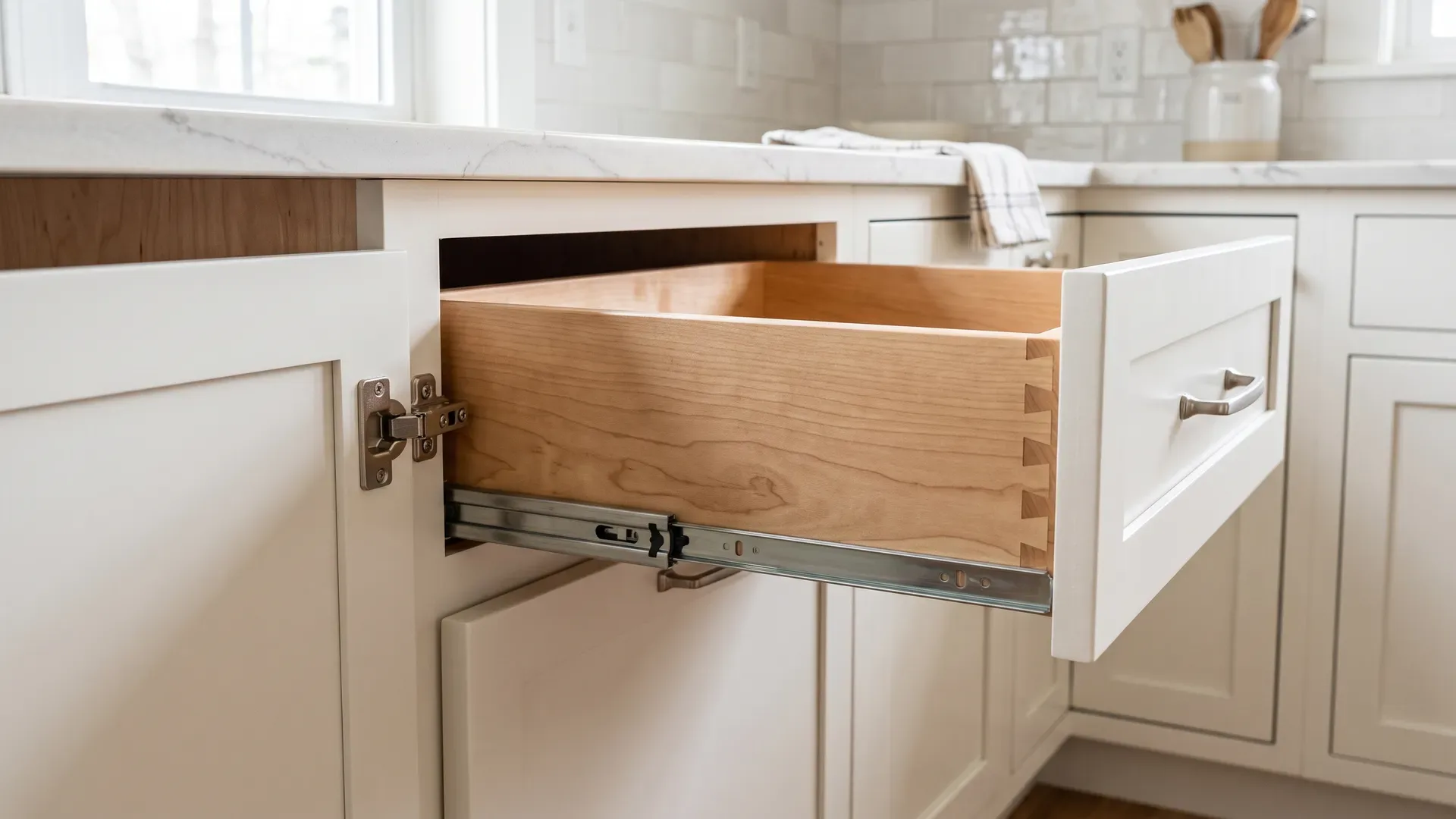
A pantry works hard - heavy cans, frequent use, and full shelves put real stress on the cabinet. Plywood boxes and shelving hold weight better than particleboard over the years, full-extension soft-close slides make roll-outs glide smoothly under load, and quality adjustable shelf hardware keeps heavy shelves level and secure. It is worth spending on the guts of a pantry even if the finish is simple, because this is a cabinet whose interior does the real work. Well-built pantry cabinetry stays solid and smooth-running for decades, while cheap shelving sags and slides wear out under the weight of a stocked pantry. For more, see our construction quality guide.
Keeping the pantry organized
Tap to expand
Keeping the pantry organized
Like any storage system, a pantry stays organized only if the system fits your habits. Once every category has a zone and the roll-outs and door racks put everything in view, maintaining it is mostly automatic - you can see what you are low on, and there is an obvious place to return each item. Do a quick seasonal edit to pull expired and forgotten items, keep backstock in a defined spot so it does not creep into the everyday shelves, and resist overfilling to the point where nothing has room. A pantry designed for visibility and zoned by category is far easier to keep tidy than a deep, dark set of shelves, which is the whole point of designing it well in the first place.
The bottom line
Tap to expand
The bottom line
A great pantry is not about how big it is - it is about how visible and reachable everything in it is. Shallow adjustable shelves, roll-out trays, door-mounted racks, clear containers, and category zones together turn even a modest tall cabinet into a pantry that holds more than you expect and stays organized with almost no effort. The pantries people love are the ones designed around the golden rule that nothing should ever hide in the back - and that is easiest to achieve when the pull-outs and shelving are planned into custom cabinetry from the start. Get the visibility right and the pantry stops being the messiest cabinet in the kitchen and becomes one of the most satisfying.
Design your dream pantry with Boise Cabinet Co
Tap to expand
Design your dream pantry with Boise Cabinet Co
Boise Cabinet Co designs custom pantry cabinets and full kitchen cabinetry with roll-outs, door storage, and adjustable shelving planned around exactly what you store, for homes across Boise, Meridian, Eagle, and Nampa. Explore our storage accessories and our cabinets, then get a planning range or book a free in-home consultation. From a single floor-to-ceiling pantry cabinet to a full built-in pantry wall, we will build storage that keeps everything visible, reachable, and effortlessly organized for years to come.