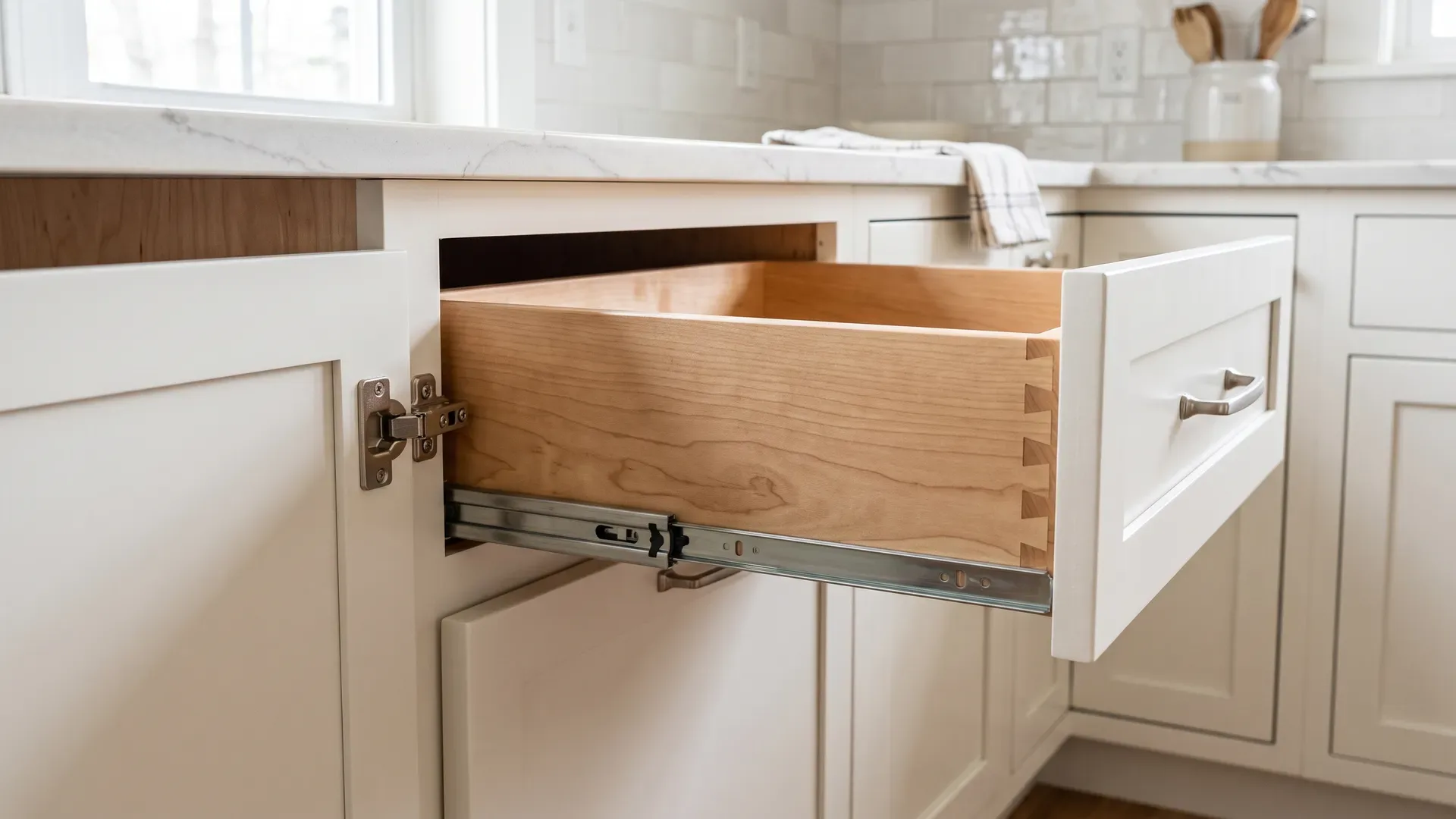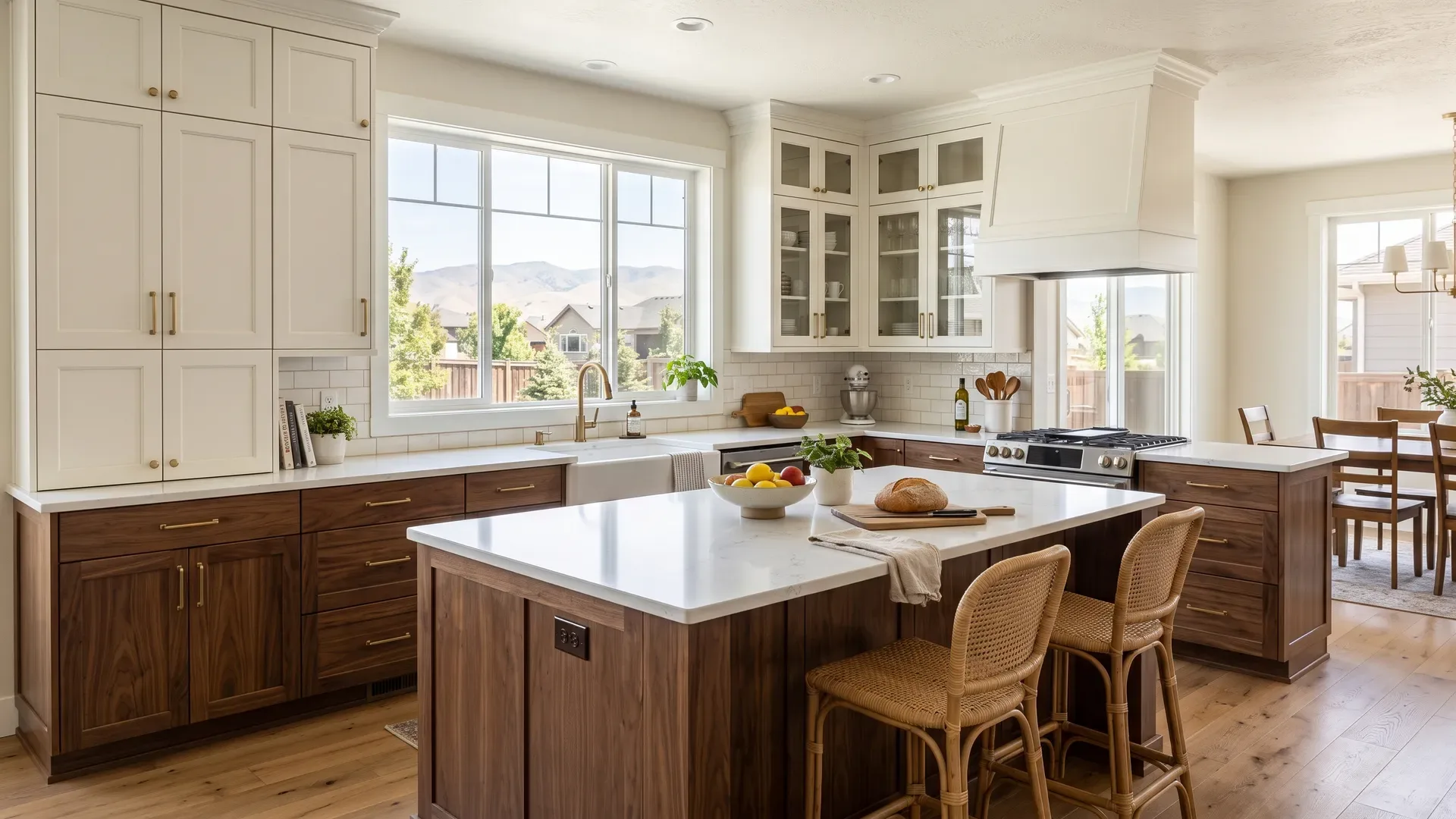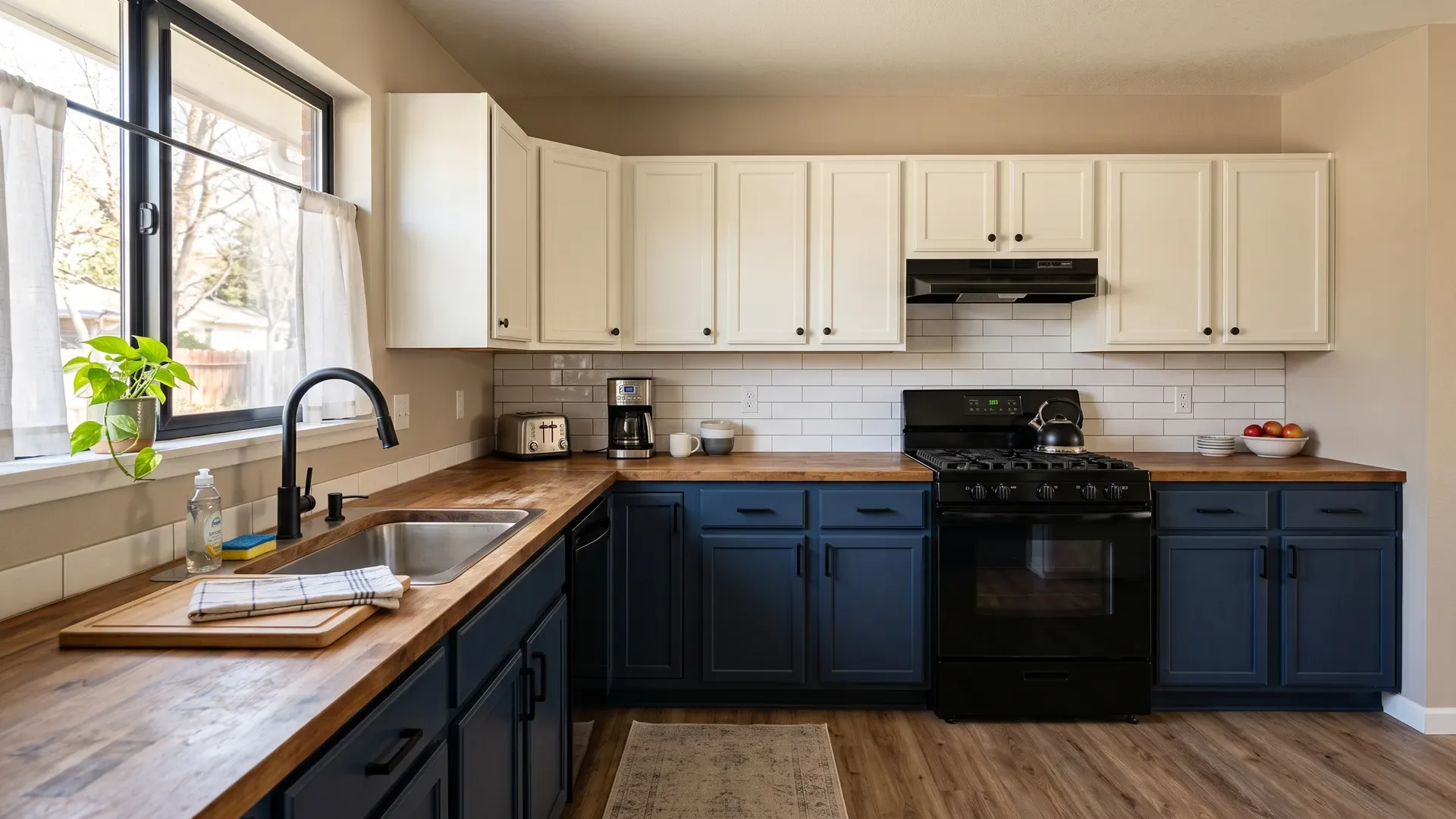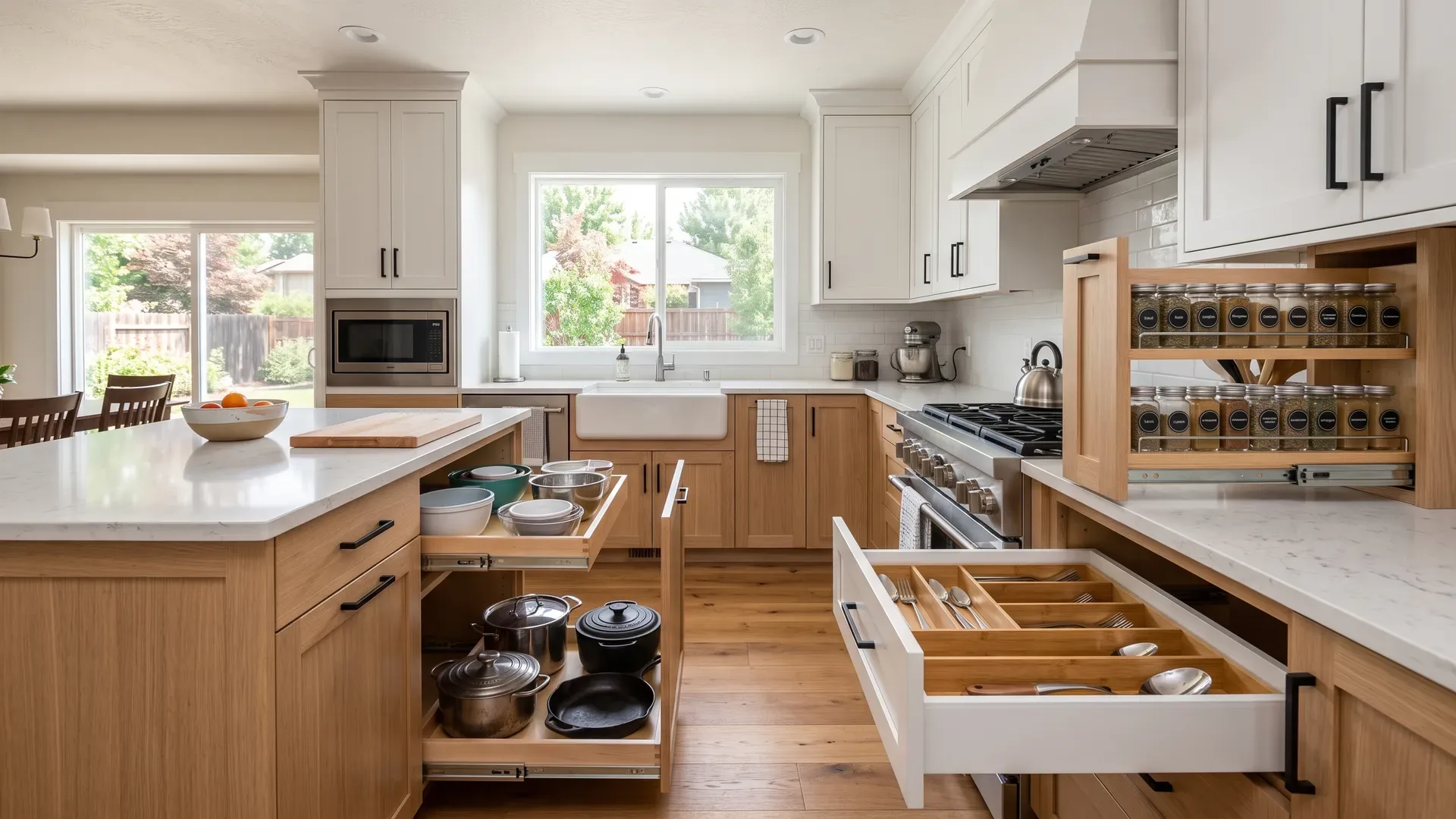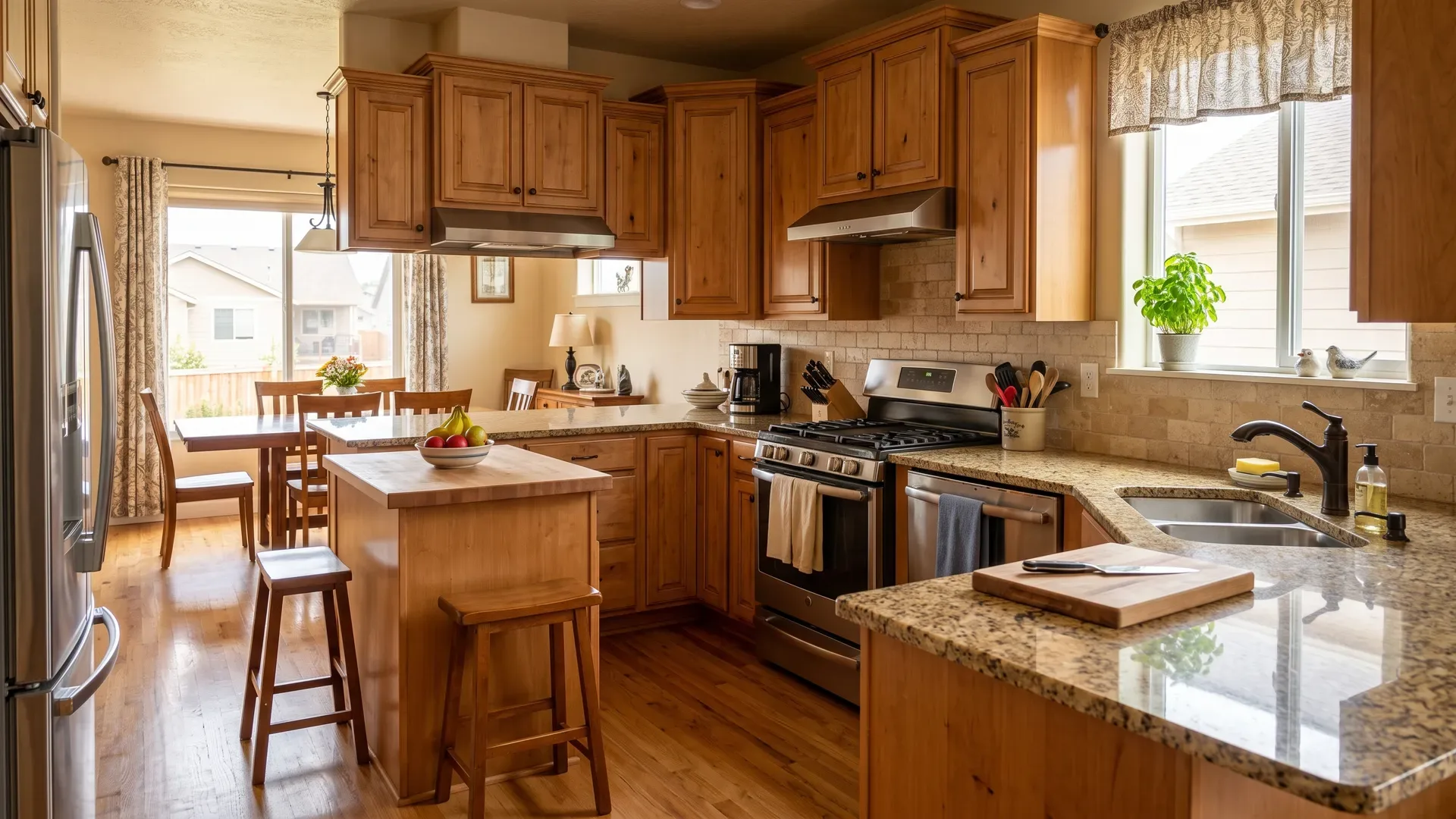
To clean kitchen cabinets without ruining the finish, use the gentlest method that works: warm water with a little mild dish soap on a soft cloth, wiping with the grain and drying immediately. Skip harsh chemicals, abrasive scrubbers, and excess water, all of which damage finishes over time. For grease, a mild degreaser or a diluted vinegar solution handles most buildup; for wood, always dry promptly since standing moisture is a wood cabinet's worst enemy. Here is how to clean every type of cabinet safely, tackle grease and buildup, and keep your cabinets looking new for decades.
Key takeaways: Clean cabinets with warm water and mild dish soap on a soft cloth, wipe with the grain, and dry immediately. Avoid harsh chemicals, abrasives, and excess water. See cabinet finishes or explore our cabinets.
The golden rule: gentle and dry
Tap to expand
The golden rule: gentle and dry
The single most important principle in cleaning cabinets is to use the least aggressive method that gets them clean, and to dry them right away. Cabinet finishes - whether paint, stain, or a clear topcoat - are durable but not indestructible, and the two things that wear them down fastest are harsh chemicals and standing moisture. Warm water with a small amount of mild dish soap handles the vast majority of everyday cleaning, applied with a soft cloth and followed immediately by a dry cloth. Starting gentle and escalating only when needed protects the finish, while reaching straight for strong cleaners or abrasive pads risks dulling, stripping, or scratching a finish that should last for decades. When in doubt, gentler is always safer.
Everyday cleaning routine
Tap to expand
Everyday cleaning routine
For regular maintenance, a simple routine keeps cabinets looking their best and prevents the buildup that requires harder cleaning later. Wipe down the surfaces you touch most - around handles, near the stove, and the fronts by the sink - regularly with a soft, damp (not wet) cloth and, if needed, a drop of mild dish soap in warm water. Wipe with the grain on wood cabinets, and follow with a dry cloth so no moisture sits on the finish or seeps into seams. A quick weekly wipe of the high-touch areas, plus prompt cleanup of splatters and spills as they happen, keeps grease and grime from accumulating in the first place. This light, consistent care is far easier on both your cabinets and you than occasional heavy scrubbing.
Removing grease and buildup
Tap to expand
Removing grease and buildup
Grease is the toughest everyday challenge, especially on the cabinets around and above the stove, where cooking vapor deposits a sticky film that attracts dust and grime. For light grease, warm water with mild dish soap (which is formulated to cut grease) usually does the job. For heavier buildup, a diluted vinegar solution (about equal parts warm water and white vinegar) cuts grease well on most finishes - test it in a hidden spot first, and avoid it on unsealed or delicate finishes. A dedicated mild degreaser made for kitchen surfaces is another option for stubborn spots. Whatever you use, apply it to the cloth rather than soaking the cabinet, work gently, rinse with a clean damp cloth, and dry immediately. Avoid the temptation to scrub hard or use abrasive pads, which will cut through the grease and the finish alike.
What to avoid
Tap to expand
What to avoid
Knowing what not to use is as important as knowing what to use. Avoid abrasive scrubbers, steel wool, and scouring powders, which scratch and dull finishes. Avoid harsh chemicals - ammonia, bleach, strong all-purpose sprays, and anything with a strong solvent - which can strip, discolor, or cloud a cabinet finish. Avoid excess water and never let cabinets stay wet; standing moisture is the top cause of finish damage, swelling, and delamination, especially at seams and edges. And skip wax-based or silicone "polish" sprays, which can build up a hazy residue over time. Sticking to mild soap, gentle degreasers, soft cloths, and prompt drying keeps you well clear of the mistakes that prematurely age cabinets.
Cleaning by cabinet finish
Tap to expand
Cleaning by cabinet finish
Different finishes have slightly different needs. Painted cabinets clean easily with mild soap and water but can show scuffs, so avoid abrasives and wipe gently. Stained and wood cabinets need the most care with moisture - wipe with the grain, dry immediately, and avoid soaking; an occasional appropriate wood-safe cleaner keeps them conditioned. Thermofoil and laminate are the most forgiving, cleaning up with mild soap and water, though they should not be exposed to excessive heat or harsh solvents. Glass fronts can be cleaned with a little glass cleaner sprayed on the cloth (not directly on the cabinet, where it can seep into the frame). Matching your method to the finish keeps every cabinet type looking its best without risking damage.
Cleaning hardware and glass
Tap to expand
Cleaning hardware and glass
Hardware and glass deserve their own attention. Knobs and pulls collect oils and grime from hands, so wipe them with a soft damp cloth and mild soap; for metal finishes, avoid abrasives and harsh chemicals that can damage the coating, and dry them to prevent water spots. For heavily soiled hardware, removing it to clean separately gives the best result without getting cleaner on the cabinet. Glass cabinet fronts clean up with glass cleaner applied to the cloth rather than sprayed directly, which keeps liquid from running into the frame joints. Keeping hardware and glass clean makes the whole kitchen look cared-for, and because these are the most-touched and most-visible details, a little attention here goes a long way.
Periodic deep cleaning
Tap to expand
Periodic deep cleaning
A few times a year, a more thorough cleaning keeps cabinets in top shape. Empty and wipe out the interiors, checking for spills and crumbs, and clean the tops of upper cabinets where dust and grease settle unseen. Give the high-grease zones around the stove extra attention, and inspect for any areas where moisture may be collecting - under the sink especially, where a slow leak can quietly damage a cabinet base. This periodic reset catches problems early and prevents the gradual buildup that makes cabinets look tired. It is also the right time to touch up any minor finish nicks and to re-tighten loose hinges and handles. A couple of deep cleans a year, paired with the light everyday routine, keeps cabinets looking new far longer.
Tackling specific stains and marks
Tap to expand
Tackling specific stains and marks
Beyond general grease, a few specific marks call for a targeted but still gentle approach. Food splatters and dried spills usually lift with a damp cloth after a minute or two of softening - resist scraping, which scratches the finish. Fingerprints and smudges around handles wipe away with mild soapy water and a dry buff. Sticky residue from labels or spills responds to a little mild soap and patience rather than a solvent. Water spots and hard-water marks near the sink come off with a soft cloth and prompt drying to prevent them recurring. For stubborn spots, a paste of baking soda and water applied gently with a soft cloth is a mild abrasive that many finishes tolerate - but test it in a hidden area first and use the lightest touch, since even mild abrasion can dull some finishes. The theme throughout is patience over force: letting a gentle cleaner do the work protects the finish far better than scrubbing hard.
Natural vs commercial cleaners
Tap to expand
Natural vs commercial cleaners
You do not need a cabinet full of specialty products. For most cabinets, the best cleaners are the simplest: mild dish soap and warm water for everyday cleaning, and diluted white vinegar for grease on sealed finishes. These gentle, inexpensive options handle the majority of cabinet cleaning safely. Commercial cabinet cleaners and wood-specific products can be worth it for periodic conditioning of stained wood or for a particular finish the manufacturer recommends, but many all-purpose sprays are harsher than cabinets need and can dull finishes over time. If you use a commercial product, choose one made for cabinets or fine wood, follow the directions, and still apply it to the cloth rather than the cabinet. When a simple, gentle homemade approach works - and it usually does - it is both cheaper and safer for your finish than reaching for something stronger.
Protecting the finish long-term
Tap to expand
Protecting the finish long-term
Beyond cleaning, a few habits protect cabinets from the damage that no amount of cleaning can reverse. Manage moisture and heat: use the range hood while cooking to reduce grease vapor, wipe up spills and splatters promptly, and be mindful of steam from kettles and appliances directed at cabinet faces. Address the area under the sink - the most common spot for hidden water damage - by checking for leaks and using a liner or mat. Handle cabinets by their hardware rather than pushing on painted surfaces to reduce wear at the edges. These small protective habits, combined with gentle regular cleaning, are what let quality cabinets look beautiful for decades rather than years - the finish lasts because it is cared for, not just cleaned.
The bottom line
Tap to expand
The bottom line
Cleaning kitchen cabinets well is mostly about restraint: use the gentlest method that works - warm water and mild dish soap on a soft cloth - wipe with the grain, and dry immediately every time. Reach for a diluted vinegar solution or a mild degreaser only for grease, and steer well clear of abrasives, harsh chemicals, and standing water, which damage finishes permanently. Match your method to your finish, keep up a light everyday routine with a couple of deep cleans a year, and protect the cabinets from moisture and heat, and they will keep looking new for decades. Good cabinets are built to last; gentle, consistent care is what lets them.
Quality cabinets built to last, from Boise Cabinet Co
Tap to expand
Quality cabinets built to last, from Boise Cabinet Co
Boise Cabinet Co builds custom kitchen cabinets with durable, easy-to-maintain finishes designed to hold up to real family life, for homes across Boise, Meridian, Eagle, and Nampa. Explore our finishes and door styles, then get a planning range or book a free in-home consultation. Whether you are caring for cabinets you love or ready for new ones, we build with quality boxes and tough, wipeable finishes so your kitchen stays beautiful and easy to keep clean for many years to come. Learn more in our construction quality guide.