The best wood for kitchen cabinets depends on the look and durability you want, but four species dominate for good reason: maple (smooth, hard, takes paint and stain beautifully), oak (strong, affordable, bold grain), cherry (rich, elegant, darkens gracefully with age), and hickory (extremely hard, dramatic grain variation). For painted cabinets, maple is usually the top choice; for a natural stained look, it comes down to the grain and tone you love. Below is how each wood compares on hardness, grain, cost, and best use, so you can match the wood to your kitchen with confidence.
Key takeaways: Maple is the go-to for painted cabinets; oak, cherry, and hickory each offer distinct grain and tone for stained looks. Match wood to your style, durability needs, and budget. See finishes and colors or plan your project.
What actually matters in a cabinet wood
Tap to expand
What actually matters in a cabinet wood
Before comparing species, it helps to know what separates them. Hardness (measured on the Janka scale) affects how well a wood resists dents and daily wear. Grain - whether it is smooth and subtle or bold and open - drives the look, especially under stain, and determines whether a wood paints smoothly. Stability matters in a kitchen's humidity swings, since some woods move more than others. And cost varies widely. There is no single "best" wood; there is the best wood for the finish and style you want. A smooth painted Shaker kitchen has a different ideal wood than a rich stained traditional kitchen that shows off natural grain.
Maple: the painter's favorite
Tap to expand
Maple: the painter's favorite
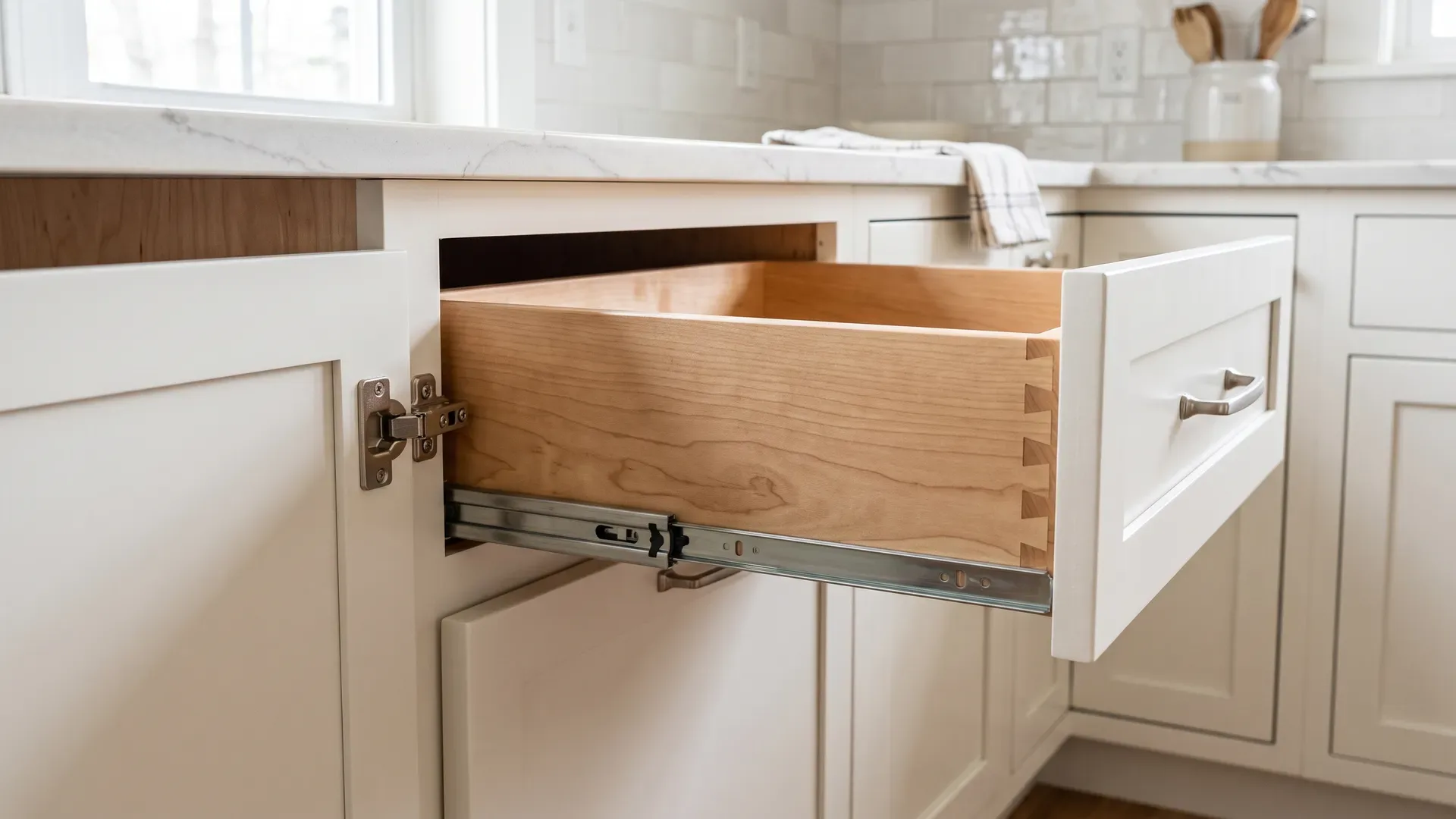
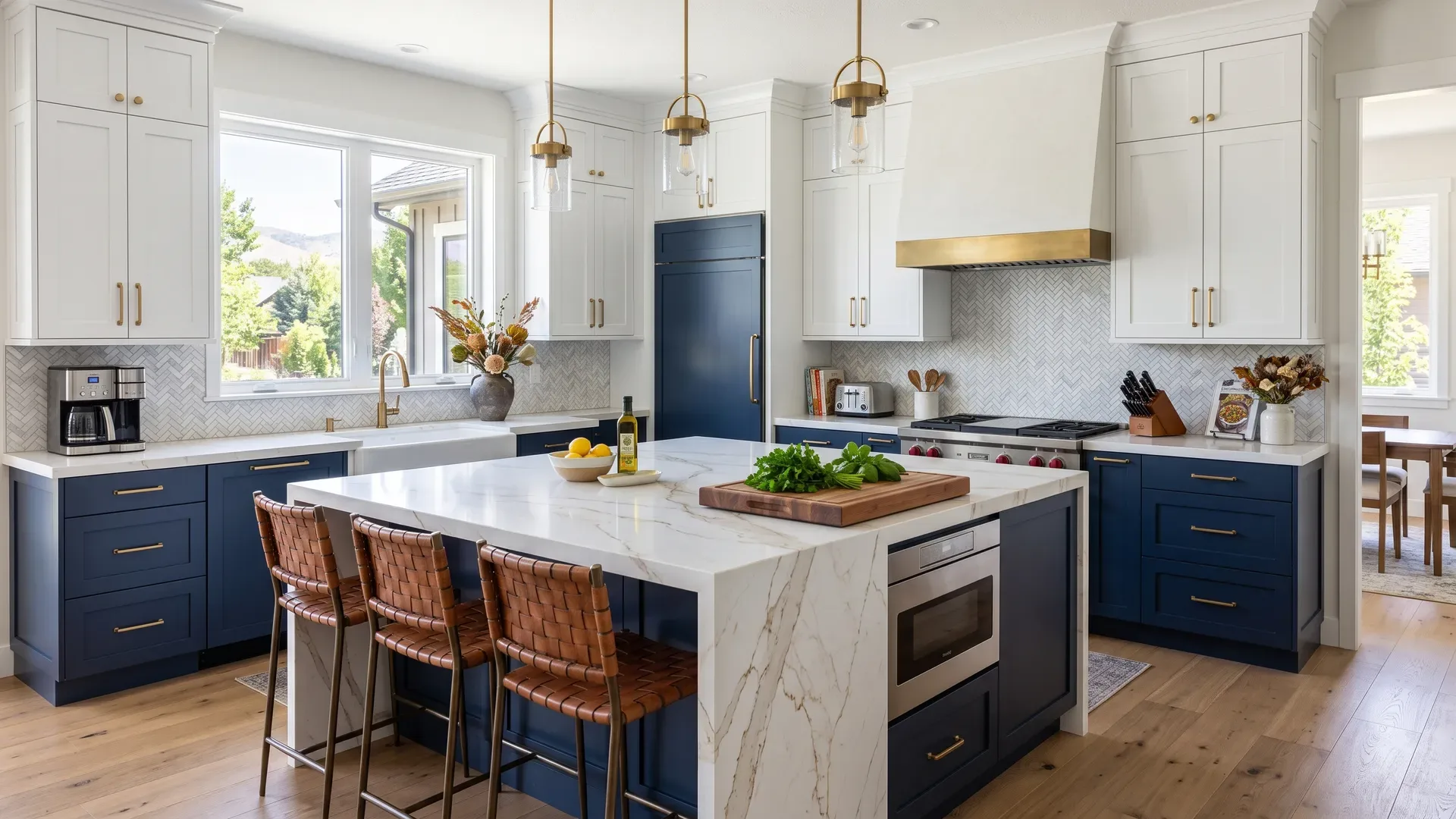
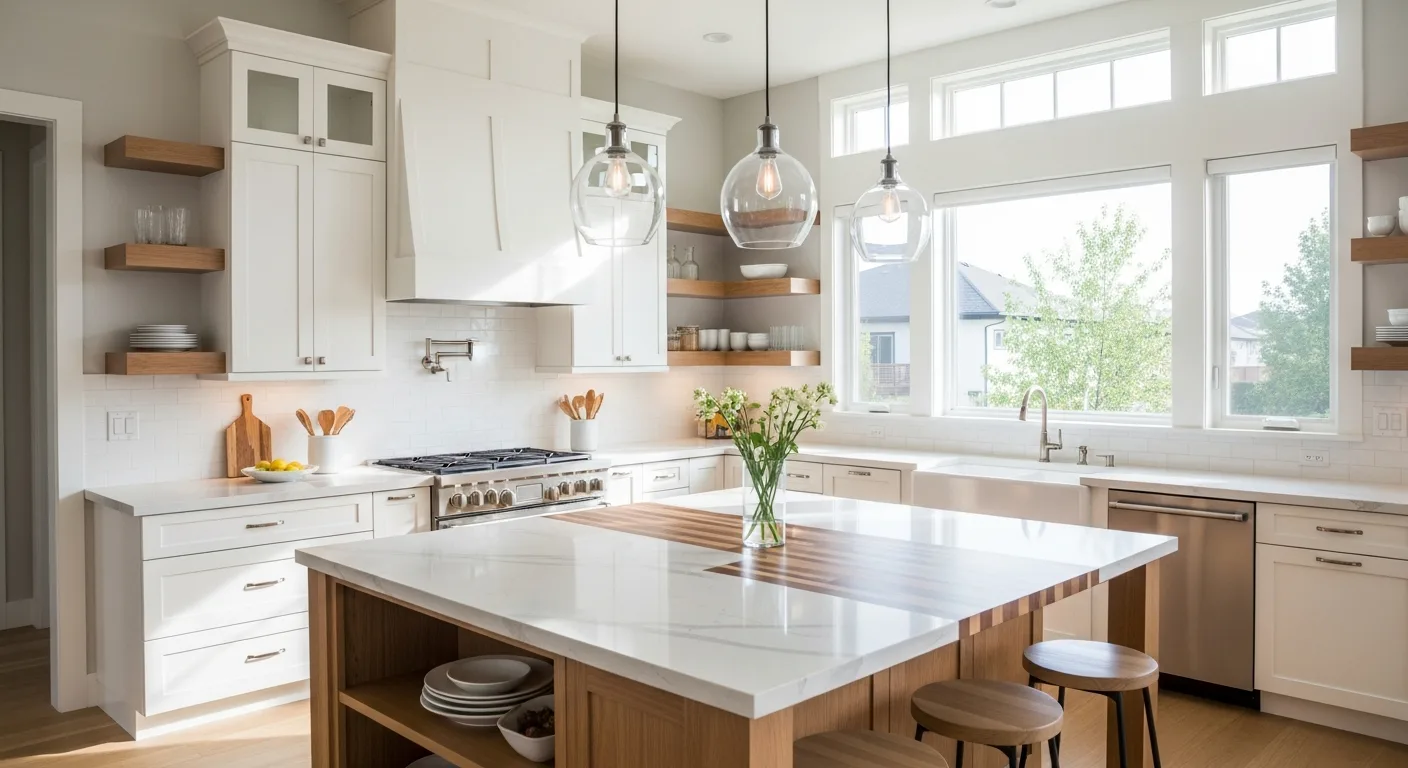
Maple is one of the most popular cabinet woods, and for painted cabinets it is often the best choice outright. It is hard and durable, resisting the dents and dings of a busy kitchen, and its fine, smooth, even grain takes paint to a flawless factory finish with no open pores to telegraph through - exactly what you want for a clean white or colored Shaker kitchen. Maple also stains reasonably well in lighter and mid tones, though it can blotch with very dark stains without proper prep. If you are leaning toward painted cabinets in any color, maple is the wood most likely to give you that smooth, high-end result, which is why so many quality painted kitchens are built on it.
Oak: strong, affordable, and back in style
Tap to expand
Oak: strong, affordable, and back in style
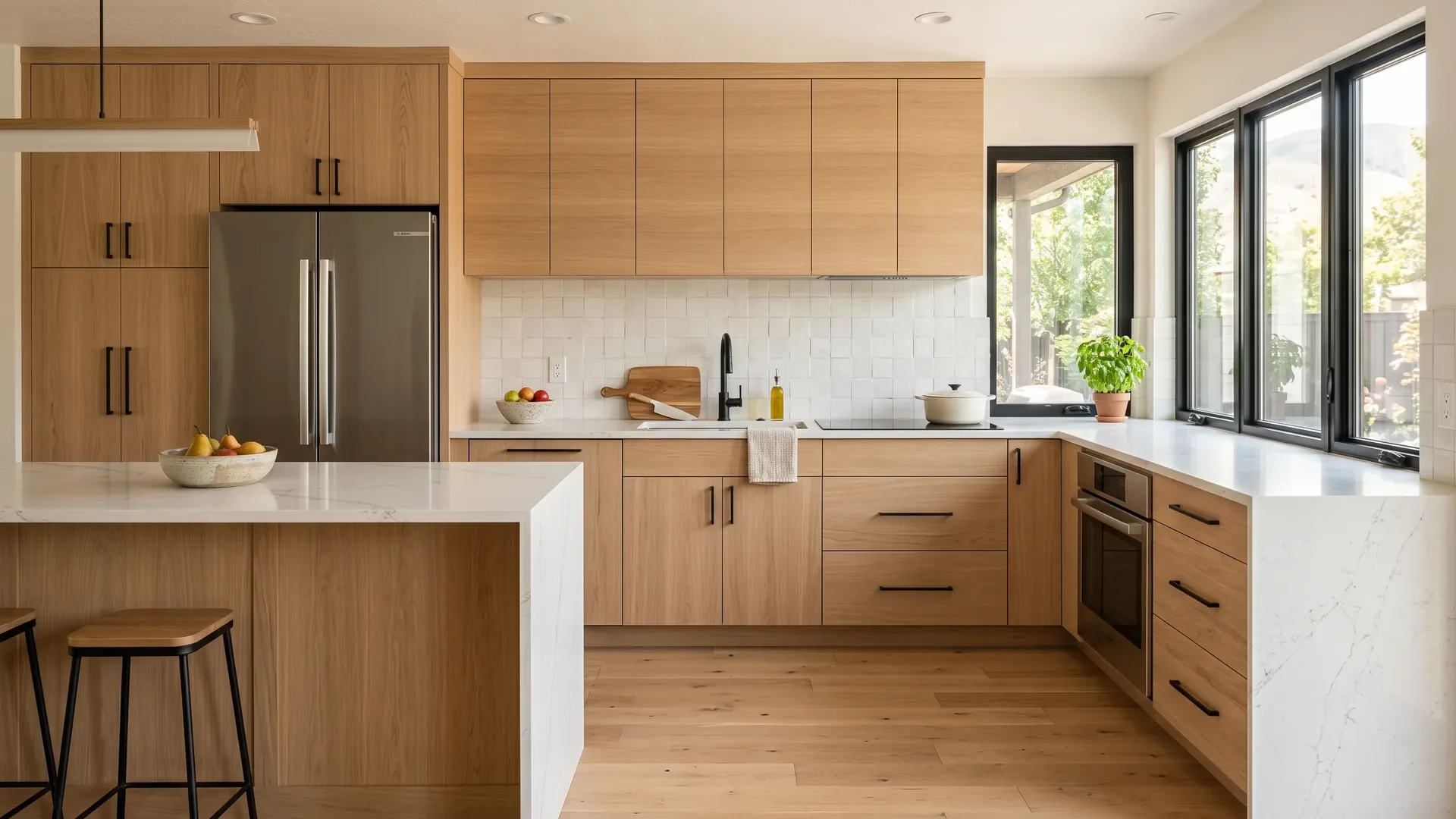
Oak is prized for its strength, affordability, and distinctive bold grain. Red oak was the builder default for decades (and is behind many of the dated honey-toned kitchens people now modernize), but white oak has surged back into fashion for its beautiful open grain and its ability to take modern light and natural finishes. Oak's deep grain is its signature: gorgeous when stained to show it off, but it must be filled if you want a perfectly smooth painted surface. Oak is hard and durable, generally more budget-friendly than cherry or walnut, and - in its white-oak form - one of the most on-trend woods in kitchens today. See our guide on making oak look modern.
Cherry: rich and timeless
Tap to expand
Cherry: rich and timeless
Cherry is a premium hardwood beloved for its smooth grain, warm reddish-brown tone, and the way it deepens and richens with age and light exposure - a cherry kitchen literally grows more beautiful over the years. It has a fine, even grain that finishes smoothly and an inherent elegance that suits traditional and transitional kitchens especially well. Cherry is softer than maple or oak, so it can dent a bit more easily, and it commands a higher price as a premium wood. But for homeowners who want a warm, luxurious, natural-wood kitchen with genuine depth and character, cherry is hard to beat, and its graceful aging is a feature rather than a flaw.
Hickory: the toughest, most dramatic
Tap to expand
Hickory: the toughest, most dramatic
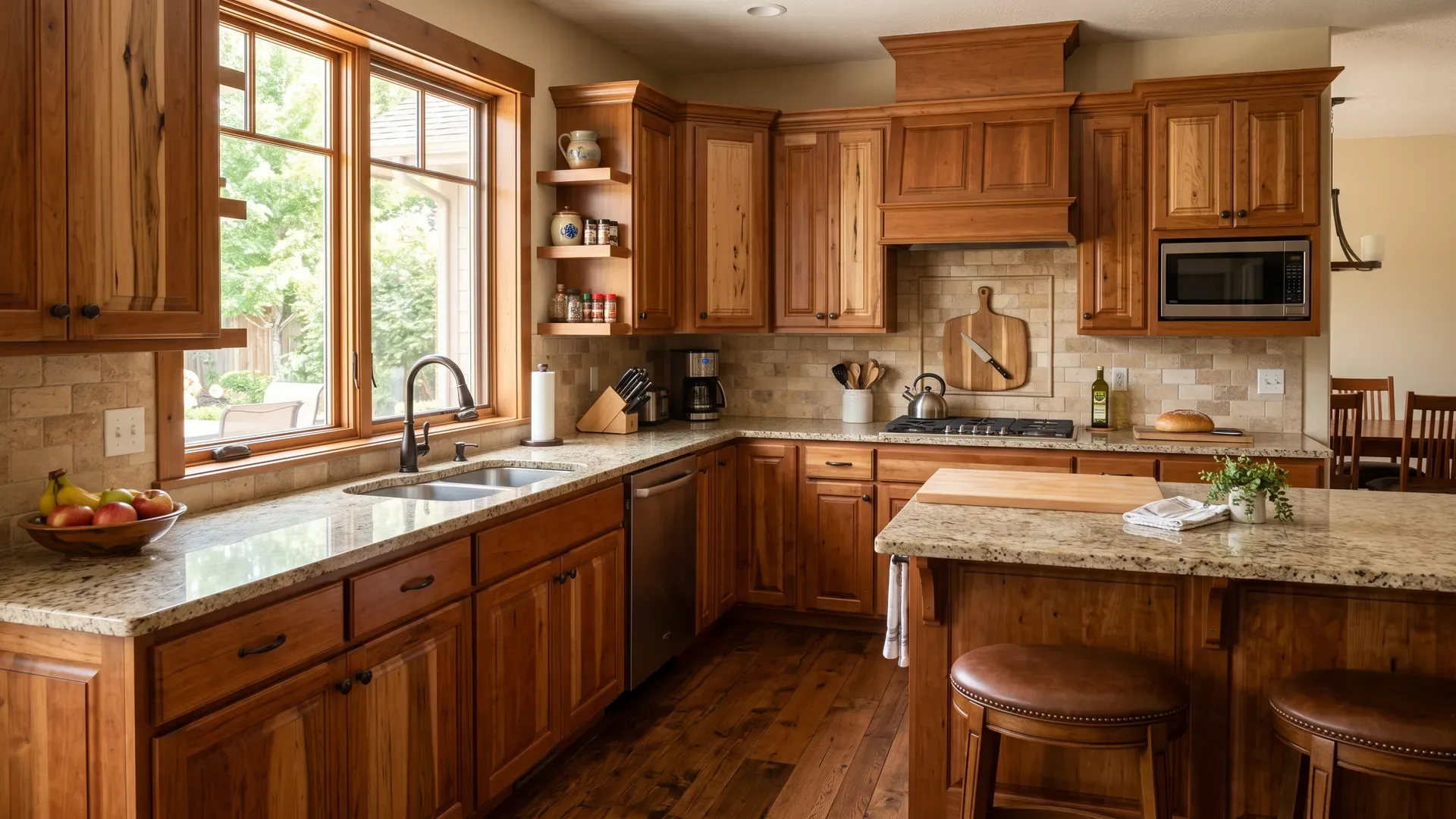
Hickory is one of the hardest domestic woods, making it exceptionally durable and a great choice for high-traffic family kitchens and rustic or lodge-style looks. Its defining trait is dramatic color and grain variation - hickory can range from near-white sapwood to deep brown heartwood within the same door, giving a kitchen enormous natural character and movement. That boldness is polarizing: people who love hickory love it for exactly that variation, while those wanting a uniform look choose something calmer. If you want a rugged, distinctive, natural kitchen that can take a beating, hickory delivers like no other wood.
Other woods worth knowing
Tap to expand
Other woods worth knowing
Beyond the big four, a few more species come up. Walnut is a luxury choice - rich, dark chocolate tones with straight elegant grain, prized in high-end modern and contemporary kitchens, at a premium price. Birch is an affordable, fairly smooth wood that stains to mimic pricier species. Alder is a softer wood with a warm knotty character popular for rustic looks. And painted MDF, while not a solid wood, is worth mentioning for door panels: it is dimensionally stable and paints perfectly smooth, so many quality painted doors use MDF center panels with solid-wood frames. Knowing these expands your options if the main four do not fit your look or budget.
Wood comparison at a glance
Tap to expand
Wood comparison at a glance
| Wood | Hardness | Grain | Best for | Cost |
|---|---|---|---|---|
| Maple | Hard | Fine, smooth | Painted cabinets, light stains | $$ |
| Oak (white) | Hard | Bold, open | Natural/modern stained looks | $$ |
| Cherry | Medium | Fine, smooth | Warm traditional, ages richly | $$$ |
| Hickory | Very hard | Dramatic variation | Rustic, high-traffic kitchens | $$ |
| Walnut | Medium-hard | Straight, elegant | Luxury modern, dark tones | $$$$ |
Choosing by finish: painted vs stained
Tap to expand
Choosing by finish: painted vs stained
The single biggest factor in choosing a wood is whether you want painted or stained cabinets. For painted cabinets, you want a smooth, tight-grained wood that will not telegraph through the finish - maple is the classic pick, with MDF panels common for the flat centers. Paying for a beautiful hardwood grain makes little sense under paint that hides it. For stained cabinets, the grain is the whole point, so you choose based on the look you love: oak's bold openness, cherry's warm elegance, hickory's dramatic variation, or walnut's dark luxury. Deciding painted-vs-stained first narrows the wood choice dramatically and prevents paying for grain you will cover or missing out on grain you wanted to see.
Durability and family kitchens
Tap to expand
Durability and family kitchens
For a busy household, hardness matters. Harder woods like maple, oak, and especially hickory resist the dents and dings that a family kitchen inflicts - dropped pans, kids, heavy daily use. Softer woods like cherry and alder are more prone to marking, though a quality finish protects them and minor patina is part of their charm. That said, construction quality and finish durability matter as much as the species itself: a well-built cabinet in a medium-hardness wood with a tough finish will outlast a poorly built one in a hard wood. Choose a hard wood if durability is your top priority, but do not overlook the box construction and finish, which do much of the real protecting. See our construction quality guide.
Cost by wood species
Tap to expand
Cost by wood species
Wood choice affects price meaningfully. Oak, maple, birch, and hickory sit in the more affordable-to-moderate range, which is part of why they are so widely used. Cherry steps up as a premium hardwood, and walnut sits at the top as a true luxury wood. The species is only one line in the total cost, though - box construction, door style, finish, and whether the cabinets are stock, semi-custom, or custom usually move the price more than the wood alone. If budget is tight, a moderate-cost hardwood in a quality build will serve you far better than a premium species in a cheap cabinet. For the full picture, see our custom cabinet cost guide.
Matching wood grain to your style
Tap to expand
Matching wood grain to your style
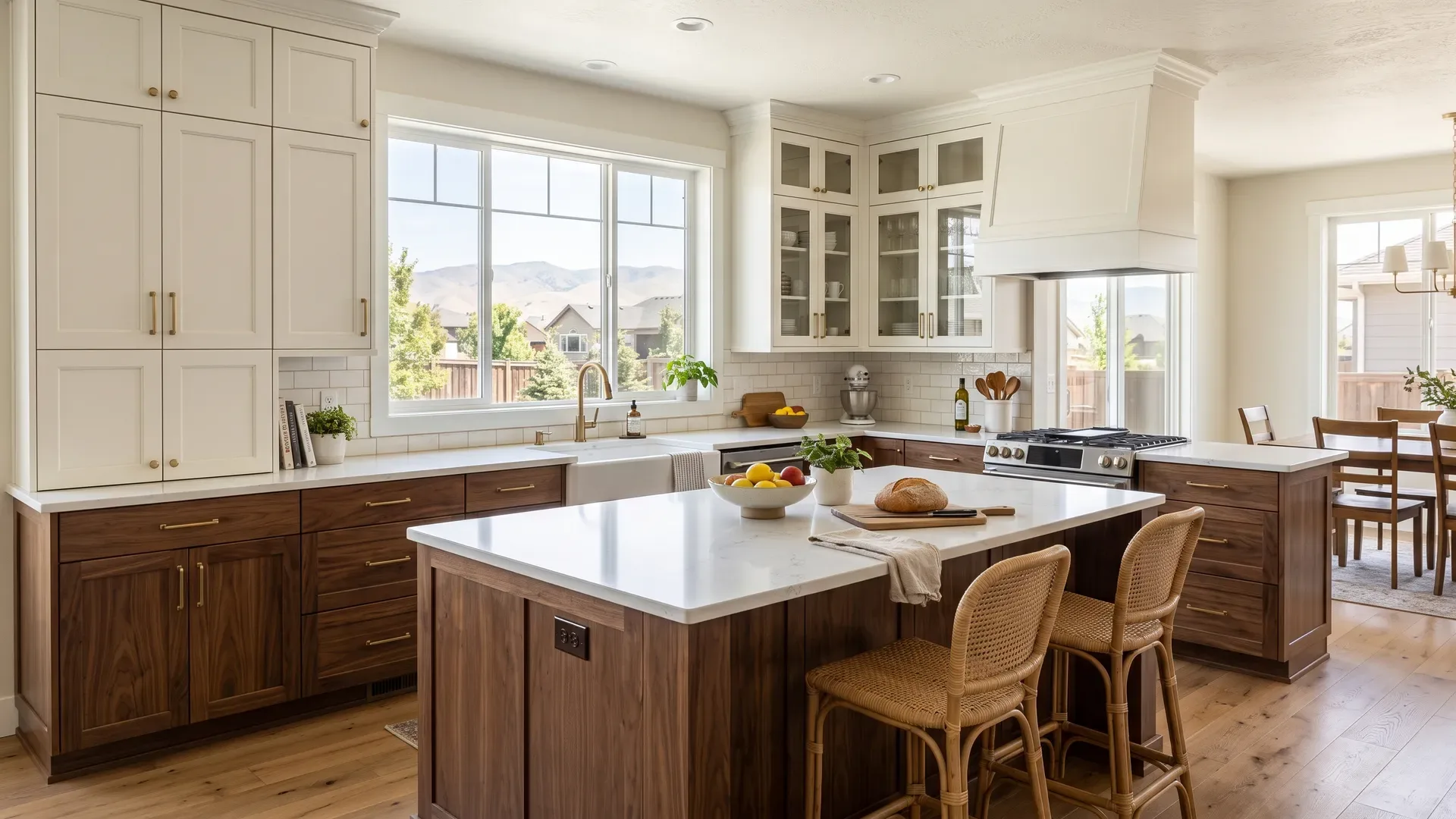
Beyond hardness and cost, the character of the grain is what gives a stained kitchen its personality, and it is worth choosing deliberately. If you want a calm, uniform look, reach for a fine, even-grained wood like maple, cherry, or walnut, where the surface reads smooth and consistent from door to door. If you want visible texture and movement, oak's bold open grain shows off beautifully under a natural stain and is exactly why white oak dominates modern kitchens right now. And if you want maximum drama and rustic character, hickory's wide swings from pale sapwood to dark heartwood create a kitchen full of natural variation that no two doors repeat. There is no better or worse here - only whether you want your cabinets to feel serene and refined or lively and organic. Deciding that early makes the species choice almost obvious, and it pairs naturally with the door style you pick from our door styles guide.
The bottom line
Tap to expand
The bottom line
There is no universal best wood for kitchen cabinets - there is the best wood for your look, durability needs, and budget. If you are painting, choose maple for its smooth, durable, paint-friendly surface. If you want natural wood, let the grain and tone lead: white oak for modern and open-grained, cherry for warm and timeless, hickory for rugged and dramatic, walnut for dark luxury. Match the species to your finish and style first, make sure the box construction and finish are quality, and you will have cabinets that look right and hold up for decades. The wood sets the character; the build makes it last.
Choose the right wood with Boise Cabinet Co
Tap to expand
Choose the right wood with Boise Cabinet Co
Boise Cabinet Co builds custom kitchen cabinets in maple, oak, cherry, hickory, walnut, and more, with quality plywood boxes and durable finishes, for homes across Boise, Meridian, Eagle, and Nampa. Explore our woods, finishes, and door styles, then get a planning range or book a free in-home consultation. We will help you match the right wood to the look you want - painted or stained, subtle or dramatic - and build it to last, so your cabinets look beautiful the day they go in and hold up to real family life for years to come.