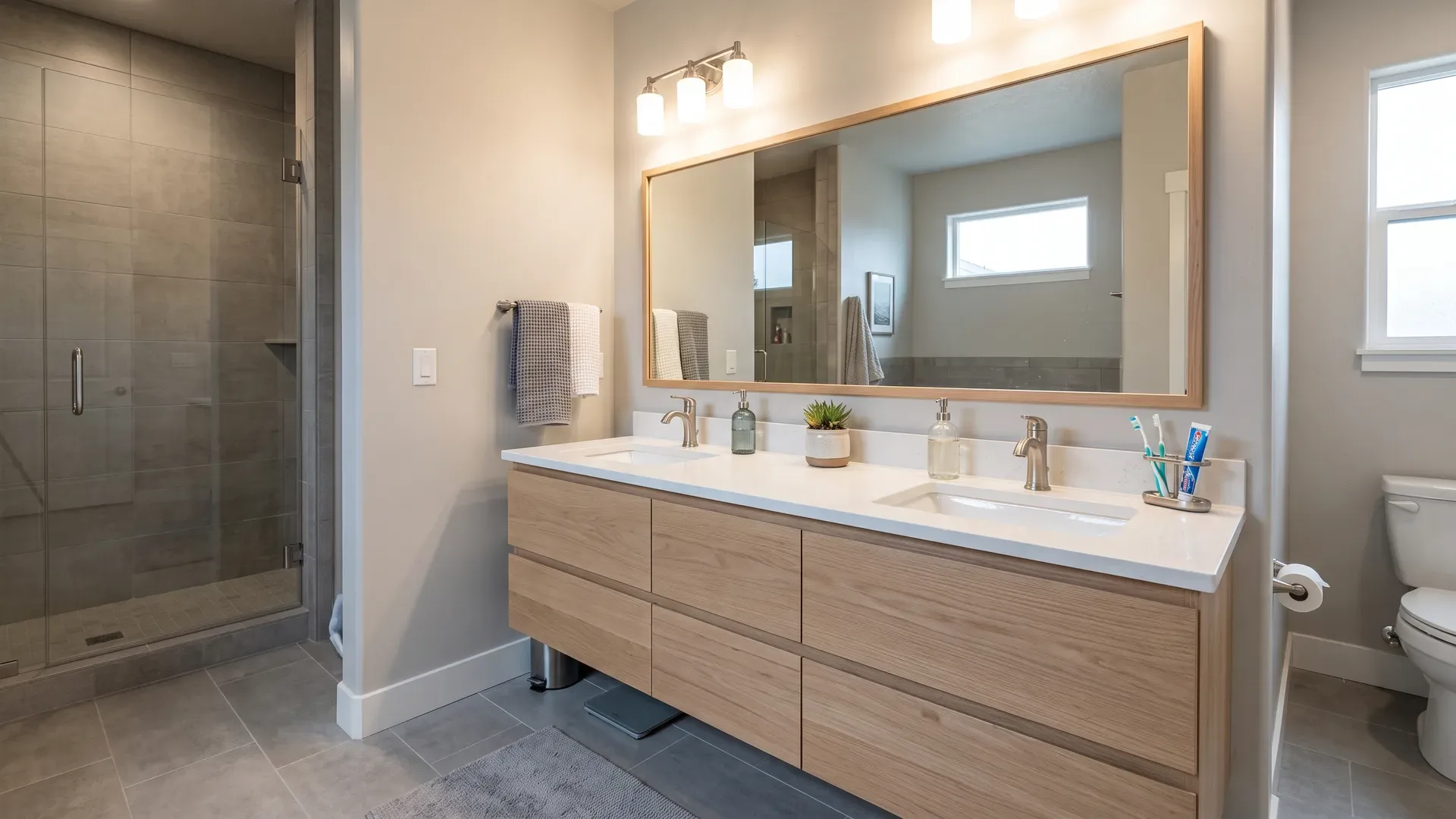
A bathroom vanity combines your sink, storage, and countertop into one piece, and choosing the right one comes down to size, configuration, style, and quality. Standard vanity heights are 32 to 36 inches, depths are 21 inches, and widths range from 24 inches for a small powder room up to 72 inches or more for a double-sink master. A custom vanity, built to your exact space and storage needs, typically runs $1,500 to $6,000+ installed depending on size, material, and finish. The best vanity fits your room precisely, gives you the storage you actually need, and matches the style of your home.
Key takeaways: Match the vanity to your space (single vs double, floating vs floor-standing), prioritize drawer storage, and choose quality construction that survives a humid bathroom. Custom vanities run about $1,500–$6,000+ installed. See our bathroom vanities or get a planning range.
Bathroom vanity sizes and dimensions
Tap to expand
Bathroom vanity sizes and dimensions
Getting the size right is the foundation of a vanity that works. The standard height is 32 to 36 inches - the taller "comfort height" of 36 inches (matching kitchen counters) is increasingly popular for adults, while 32 inches can suit a kids' bath. The standard depth is 21 inches, though slim 18-inch-deep vanities are a lifesaver in tight powder rooms and narrow spaces. Width is where you have the most range: 24 to 30 inches for a small single vanity, 36 to 48 inches for a comfortable single, and 60 to 72 inches or more for a double-sink vanity. Before you fall in love with a size, measure your room carefully, including door swings, the toilet clearance beside the vanity, and where the plumbing rough-ins sit, since moving plumbing adds cost.
Vanity configurations
Tap to expand
Vanity configurations
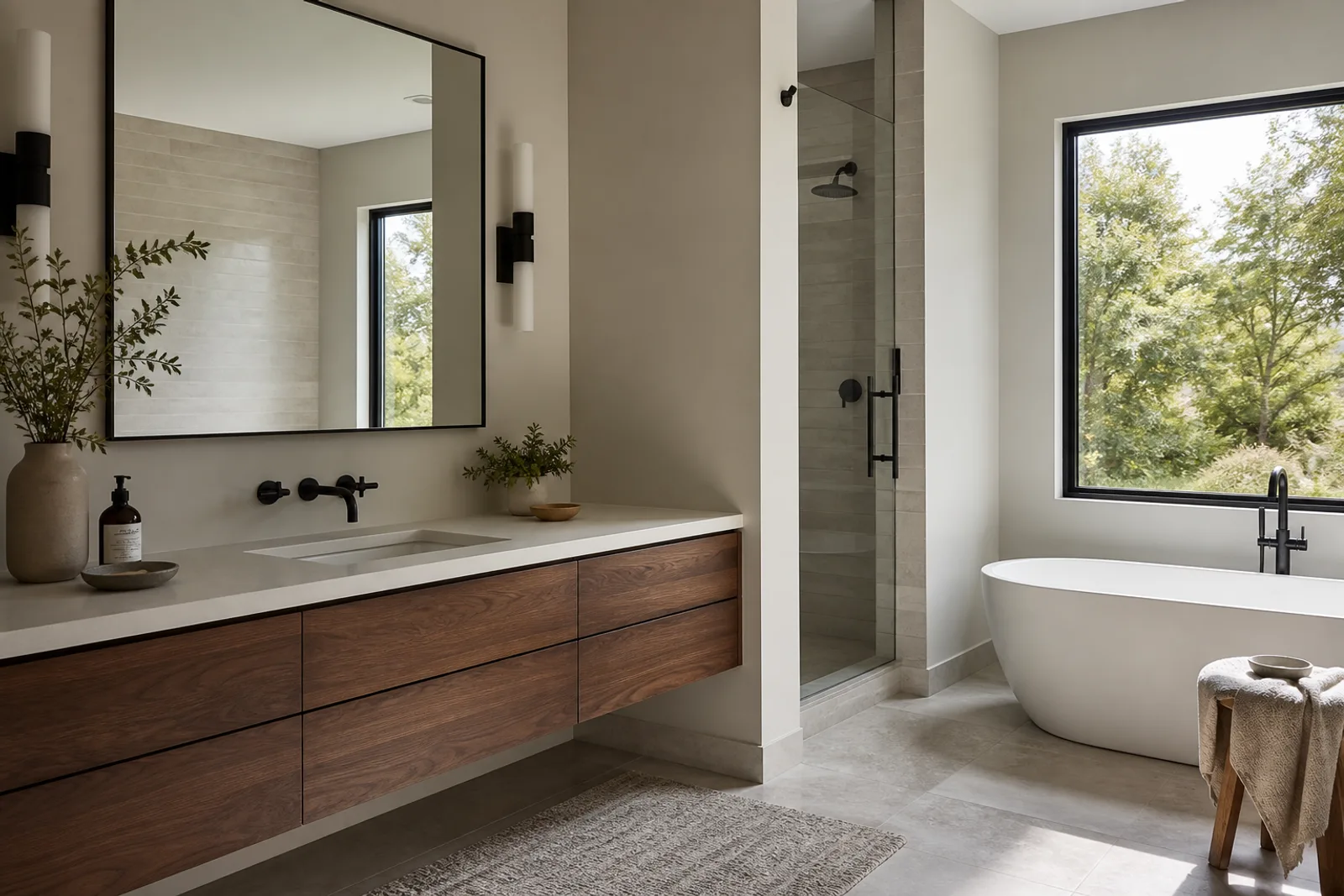
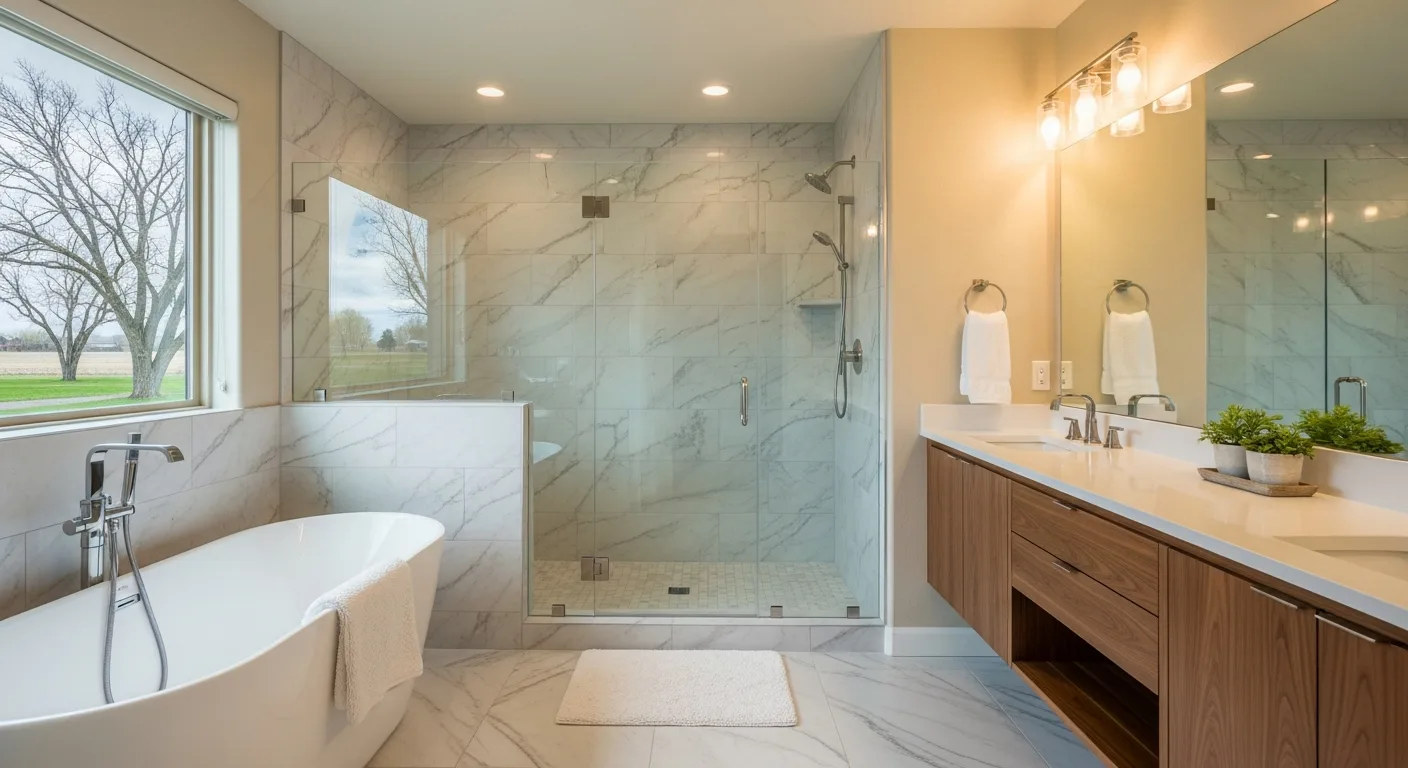
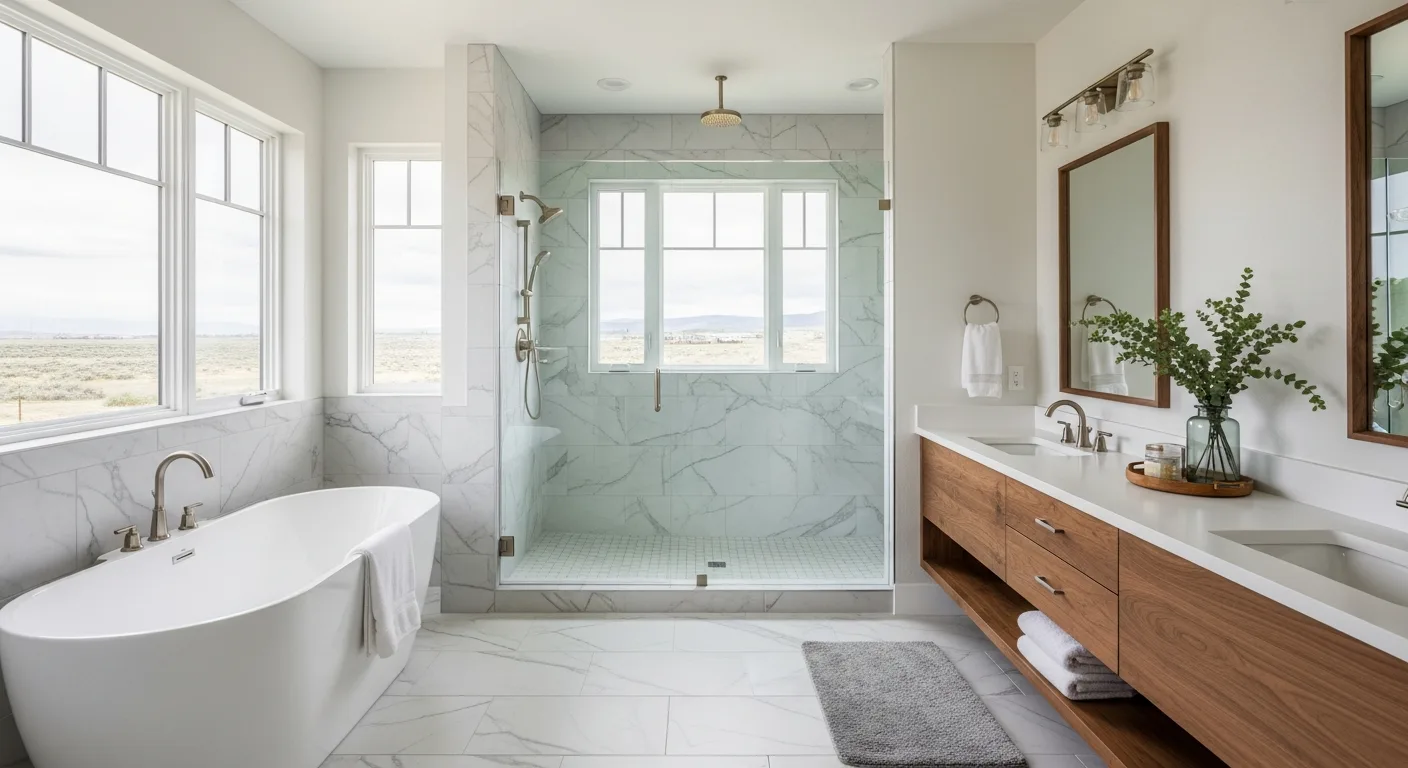
Beyond size, the layout of the vanity shapes how it lives. A single-sink vanity maximizes counter and storage in a modest bath, while a double-sink vanity is a morning-routine gift for couples but needs at least 60 inches of width to feel right. Floating (wall-mounted) vanities read modern, make a small bath feel larger by showing floor beneath, and simplify cleaning, though they need solid blocking in the wall and offer a bit less storage. Floor-standing vanities are the traditional choice, maximizing storage and hiding plumbing completely. Think about who uses the bathroom and how, and let that drive the configuration as much as looks.
Prioritize the right storage
Tap to expand
Prioritize the right storage
The most common vanity regret is not enough usable storage, and the fix is drawers. A vanity built mostly around a big open cabinet under the sink wastes space to the plumbing and forces you to stack things you cannot see. Drawers - especially U-shaped drawers that wrap around the plumbing - turn that same footprint into organized, reach-everything storage for everything from hair tools to backup toiletries. Roll-out trays, built-in outlets inside a drawer for charging, a tilt-out tray at the sink, and a dedicated hamper pull-out all make a vanity dramatically more functional. When you plan a custom vanity, we design the interior around what you actually store, which is the difference between a pretty vanity and one you love using every day.
Vanity styles and finishes
Tap to expand
Vanity styles and finishes
Your vanity should echo the style of your home and bathroom. Shaker door fronts are the versatile default, at home in nearly any bath. Slab (flat-panel) fronts, especially in a warm wood or a bold paint, read clean and modern. Raised-panel suits a traditional space. For finish, painted vanities in white, greige, navy, and green are all popular, and natural stained wood - white oak and walnut especially - brings warmth and a spa-like feel. Because bathrooms are humid, finish quality matters even more than in a kitchen: a properly sprayed, sealed finish resists the moisture and temperature swings a bathroom throws at it. Coordinate the vanity finish with your hardware, faucet, and mirror for a pulled-together look.
Countertops and sinks
Tap to expand
Countertops and sinks
The vanity top and sink complete the piece. Quartz is the most popular top for its durability and low maintenance, while natural stone like granite or marble brings unique character (marble needs a little more care in a bathroom). Undermount sinks are the clean, easy-to-wipe standard; vessel sinks make a bold statement but sit higher, which affects vanity height. Decide whether you want a single wide sink or two, and whether the faucet is deck-mounted or wall-mounted, early, because those choices affect the vanity and plumbing layout. A cohesive combination of top, sink, and faucet is what makes a vanity feel custom rather than assembled.
What bathroom vanities cost
Tap to expand
What bathroom vanities cost
| Type | Rough cost (installed) |
|---|---|
| Stock / prefab vanity | $500–$1,500 |
| Semi-custom | $1,500–$3,500 |
| Custom (built to your space) | $2,500–$6,000+ |
Cost is driven by size, material, finish, the top and sink you choose, and any plumbing changes. A double vanity naturally costs more than a single, and premium stone or specialty storage adds up. For how vanities fit a broader budget in our market, see the Boise cabinet cost guide.
Judging vanity quality
Tap to expand
Judging vanity quality
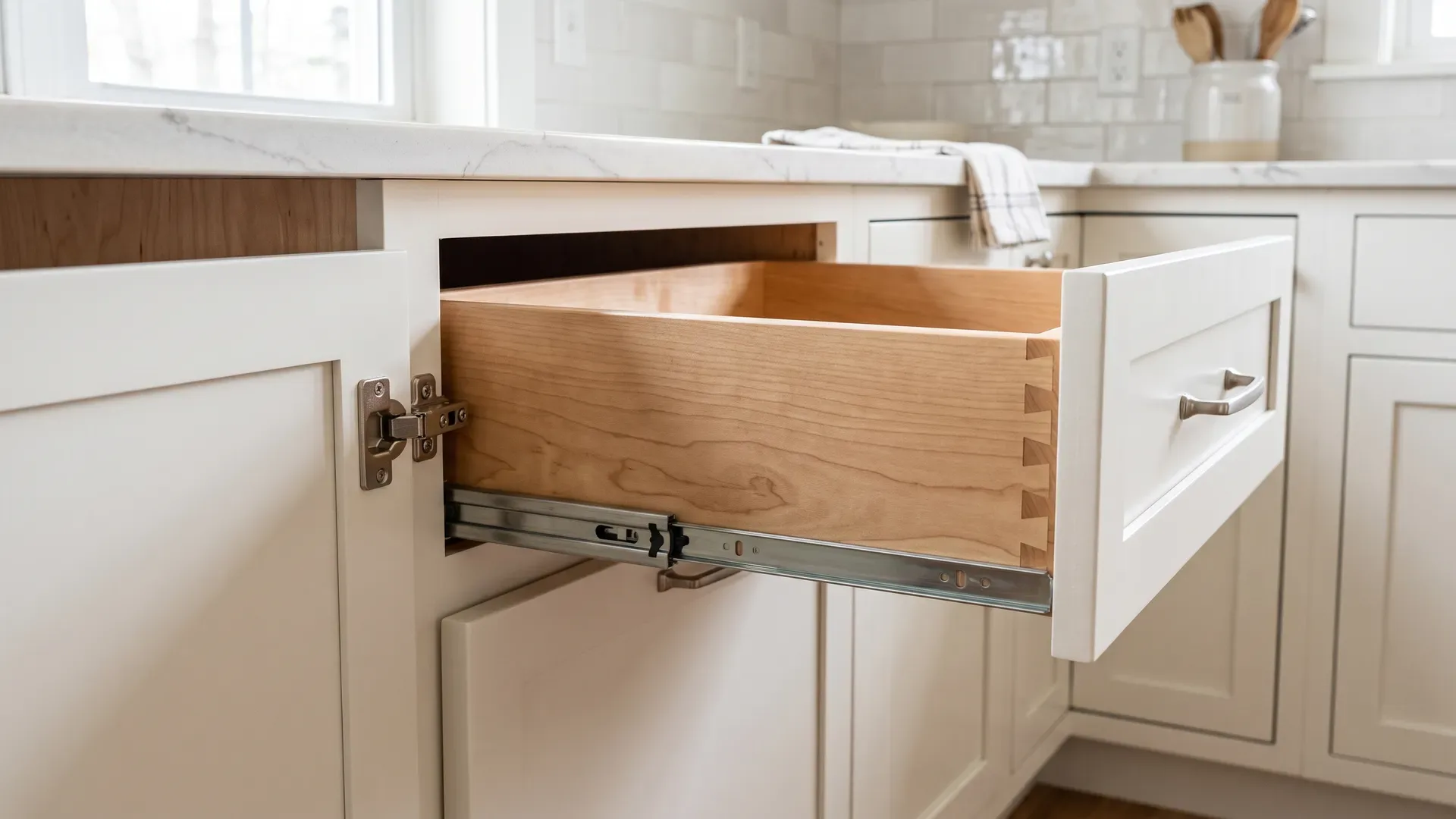
A bathroom is the most demanding environment in the house for cabinetry - humidity, temperature swings, and splashes all test the build. Look for a plywood box rather than particleboard, which can swell if water reaches it, solid-wood dovetailed drawers on soft-close glides, adjustable soft-close hinges, and a durable, well-applied finish. A moisture-resistant, quality-built vanity will still look and function beautifully years later, while a bargain particleboard unit can delaminate and sag surprisingly fast in a bathroom. The same construction standards that make a great kitchen cabinet make a great vanity - see our cabinet construction quality guide.
Aging-in-place and accessibility
Tap to expand
Aging-in-place and accessibility
If you are planning for the long term, a few thoughtful choices make a vanity work for every age and ability. A comfort-height counter is easier on the back, drawers are far easier to use than reaching into a low cabinet, D-shaped pulls are simple to grip, and a section of open knee space or a wall-mounted vanity can allow seated use. These universal-design touches blend seamlessly into a beautiful bathroom and are much easier to build in now than to retrofit later, which is why we raise them during design for clients thinking about staying in their home.
How to choose your vanity in 5 steps
Tap to expand
How to choose your vanity in 5 steps
- Measure the space precisely, including clearances and plumbing locations.
- Decide single vs double and floating vs floor-standing based on who uses it.
- Prioritize drawer storage designed around what you actually keep.
- Choose a style and finish that suits your home and the bathroom's humidity.
- Coordinate the top, sink, faucet, and hardware, then confirm construction quality.
Common bathroom vanity mistakes to avoid
Tap to expand
Common bathroom vanity mistakes to avoid
A few avoidable missteps account for most vanity regrets. The biggest is choosing a size that fights the room - a vanity that blocks a door swing, crowds the toilet, or leaves no landing space beside the sink makes a bathroom feel cramped no matter how beautiful the vanity itself is. Measuring carelessly, or forgetting to account for baseboards, trim, and plumbing locations, leads to exactly that problem. The second common mistake is under-planning storage: falling for a lovely vanity with a single open cabinet under the sink and then discovering there is nowhere sensible to keep daily items. Drawers, not open shelves under a sink, are almost always the answer.
People also routinely underestimate the toll a bathroom takes on cabinetry, and choose a bargain particleboard vanity that swells, delaminates, and sags within a few years in the humidity - a false economy that costs more when it has to be replaced. Finally, many homeowners select the vanity in isolation and then struggle to coordinate the top, sink, faucet, mirror, and hardware after the fact, ending up with a collection of parts rather than a cohesive piece. Choosing those elements together, with the room's real dimensions in hand, is how you sidestep every one of these pitfalls at once.
Where bathroom vanities come from
Tap to expand
Where bathroom vanities come from
Like kitchen cabinets, vanities come in stock, semi-custom, and custom tiers, and where you buy shapes both the fit and the experience. Stock and prefab vanities from home centers and online retailers are the fastest and cheapest, but they come in fixed sizes that rarely match your space perfectly, and their quality varies widely. Semi-custom vanities offer more sizes, finishes, and modifications through a dealer or showroom. A custom vanity, built by a local cabinet company, is made to your exact dimensions with the storage, style, and construction you choose, and it is installed by the same team that built it - which matters in a bathroom, where a precise fit against tile and plumbing is the difference between a clean, finished look and an awkward one. If your bathroom is a standard shape and your budget is tight, a stock vanity can serve you well; if the space is tricky, or you want specific storage or a look no catalog offers, custom is the path to a vanity that fits like it was made for the room, because it was.
The bottom line
Tap to expand
The bottom line
A great bathroom vanity is equal parts fit, function, and finish. Nail the size and configuration for your space, build in the drawer storage you will actually use, choose a style and a moisture-tough finish that suit your home, and insist on quality construction that can handle a bathroom, and you will have a piece that looks beautiful and works flawlessly for decades. Whether it is a compact powder-room vanity or a spa-like double in the master, the goal is the same: a vanity that fits your space and your life exactly, which is precisely what a custom build delivers.
Design your vanity with Boise Cabinet Co
Tap to expand
Design your vanity with Boise Cabinet Co
Boise Cabinet Co designs, builds, and installs custom bathroom vanities - single and double, floating and floor-standing - for homes across Boise, Meridian, Eagle, and Nampa, sized to your space with the storage and finishes you choose. Coordinate with your door style, finish, and hardware, then get a planning range or book a free in-home consultation.