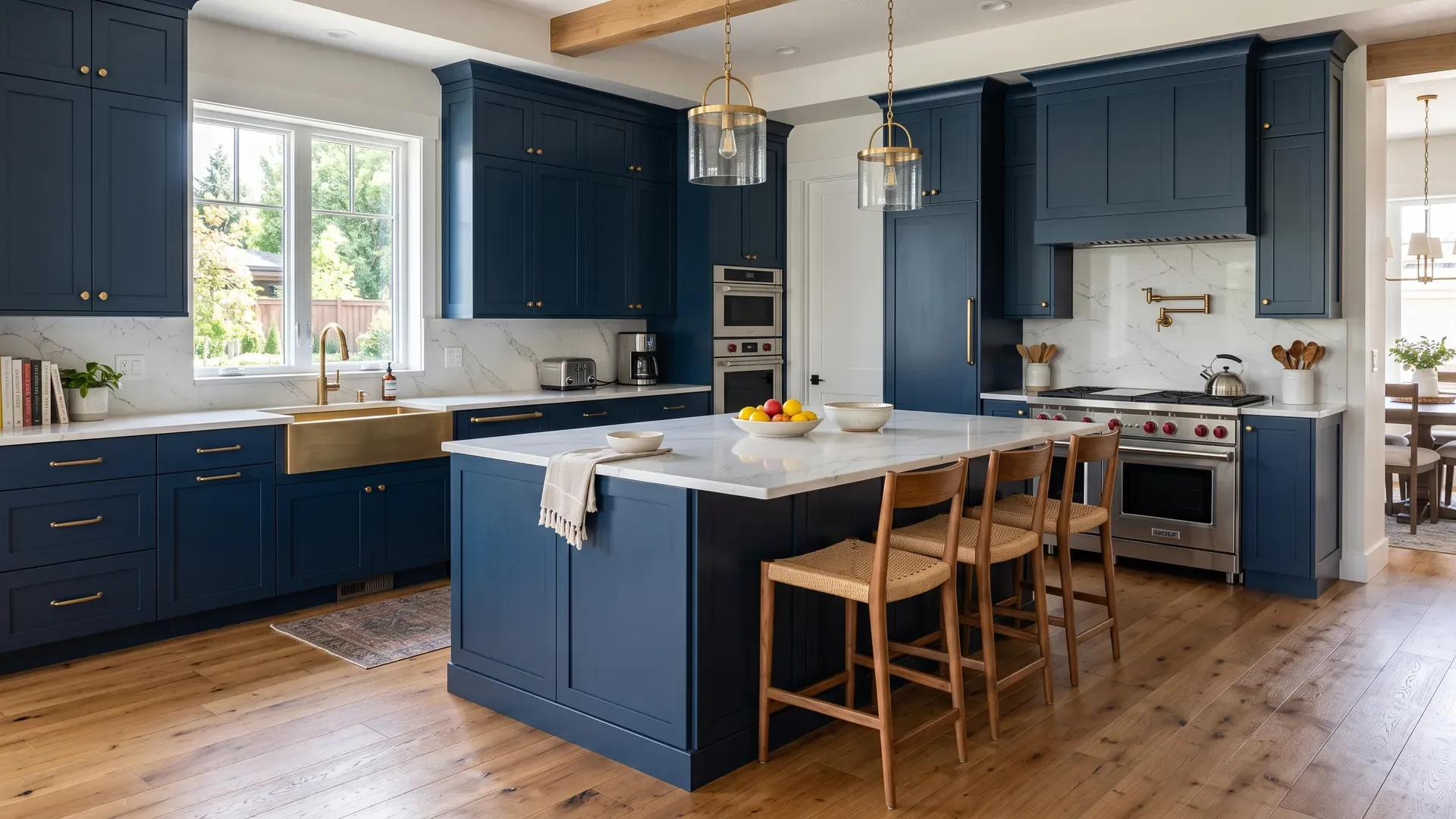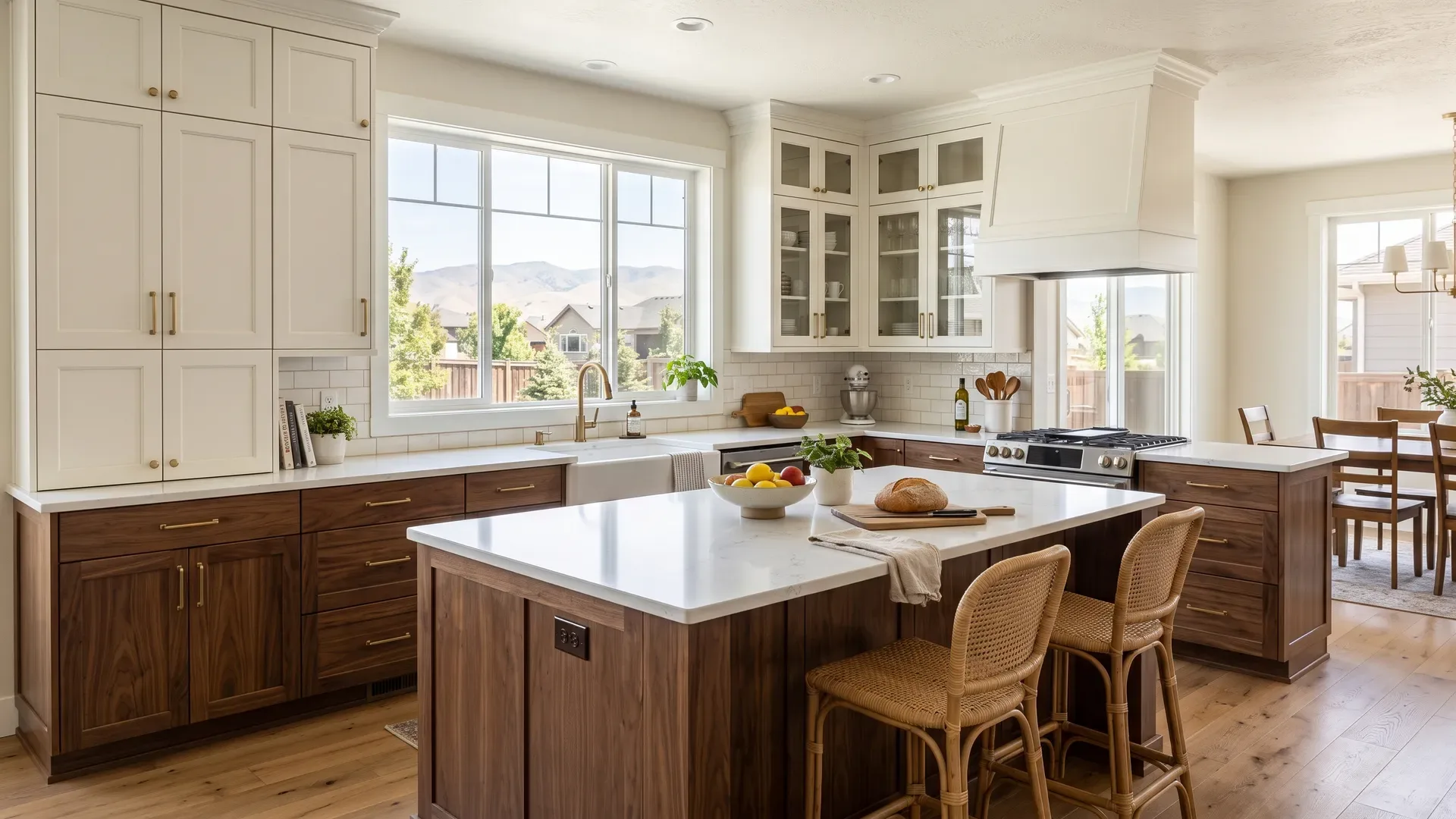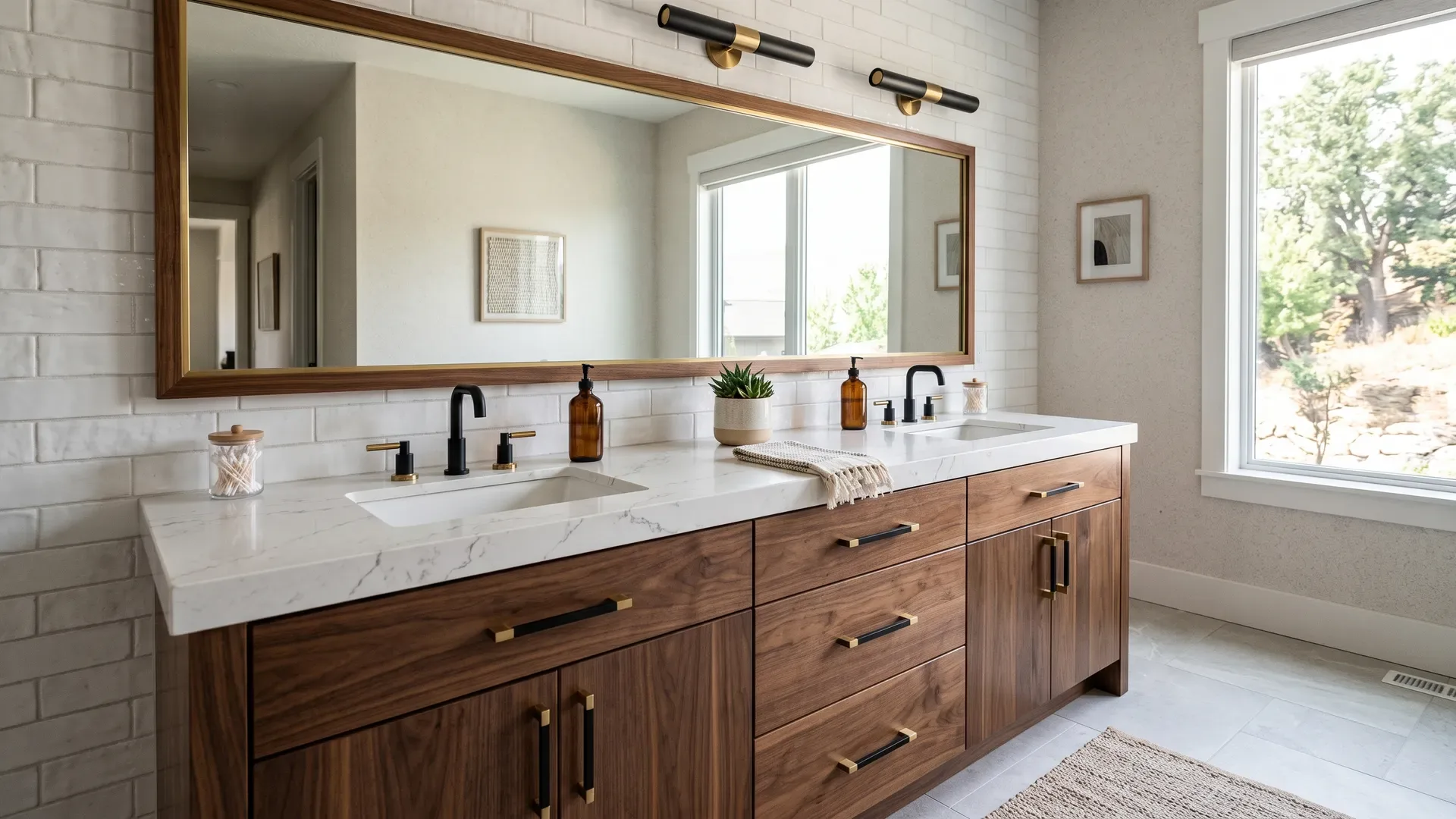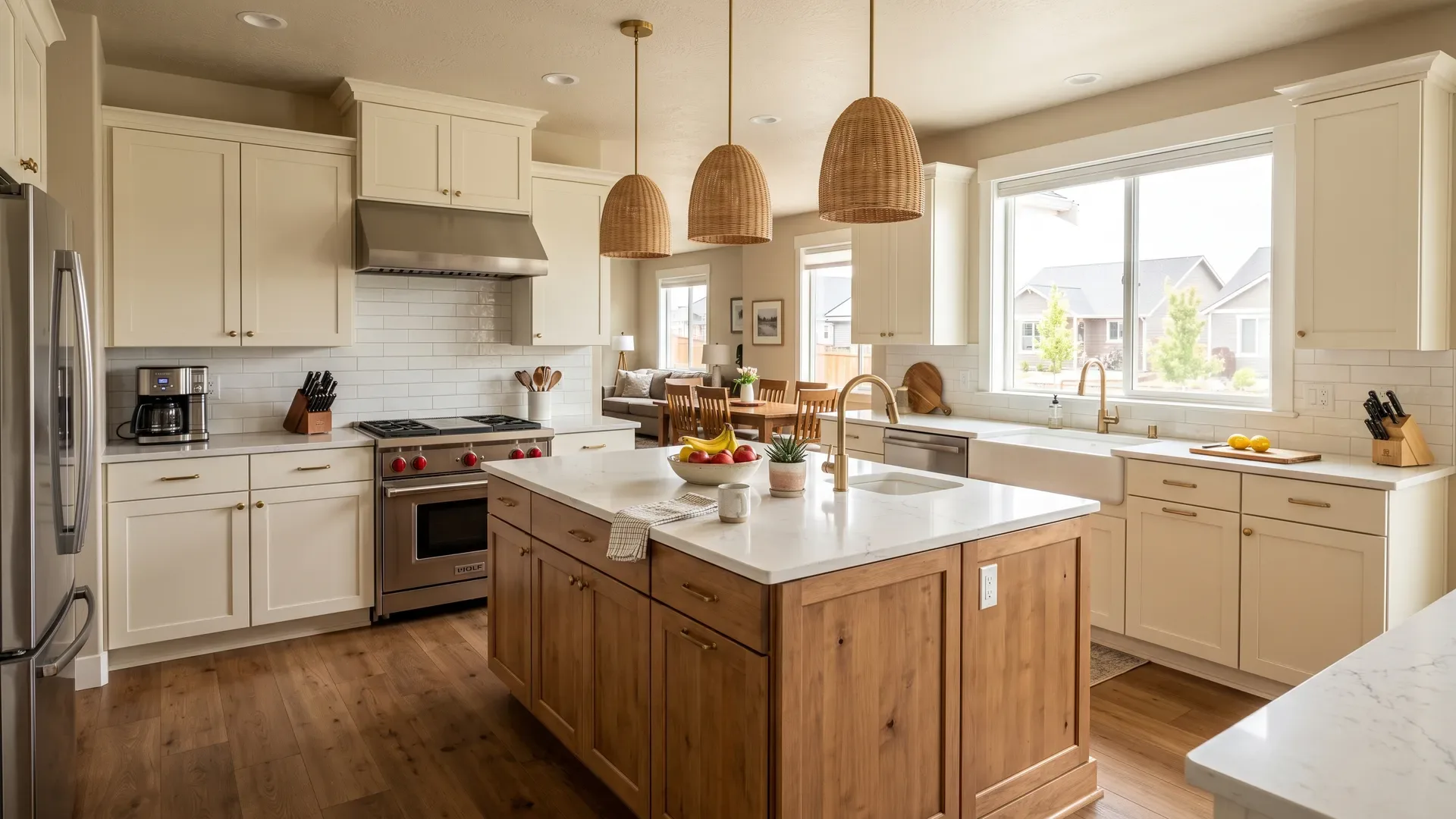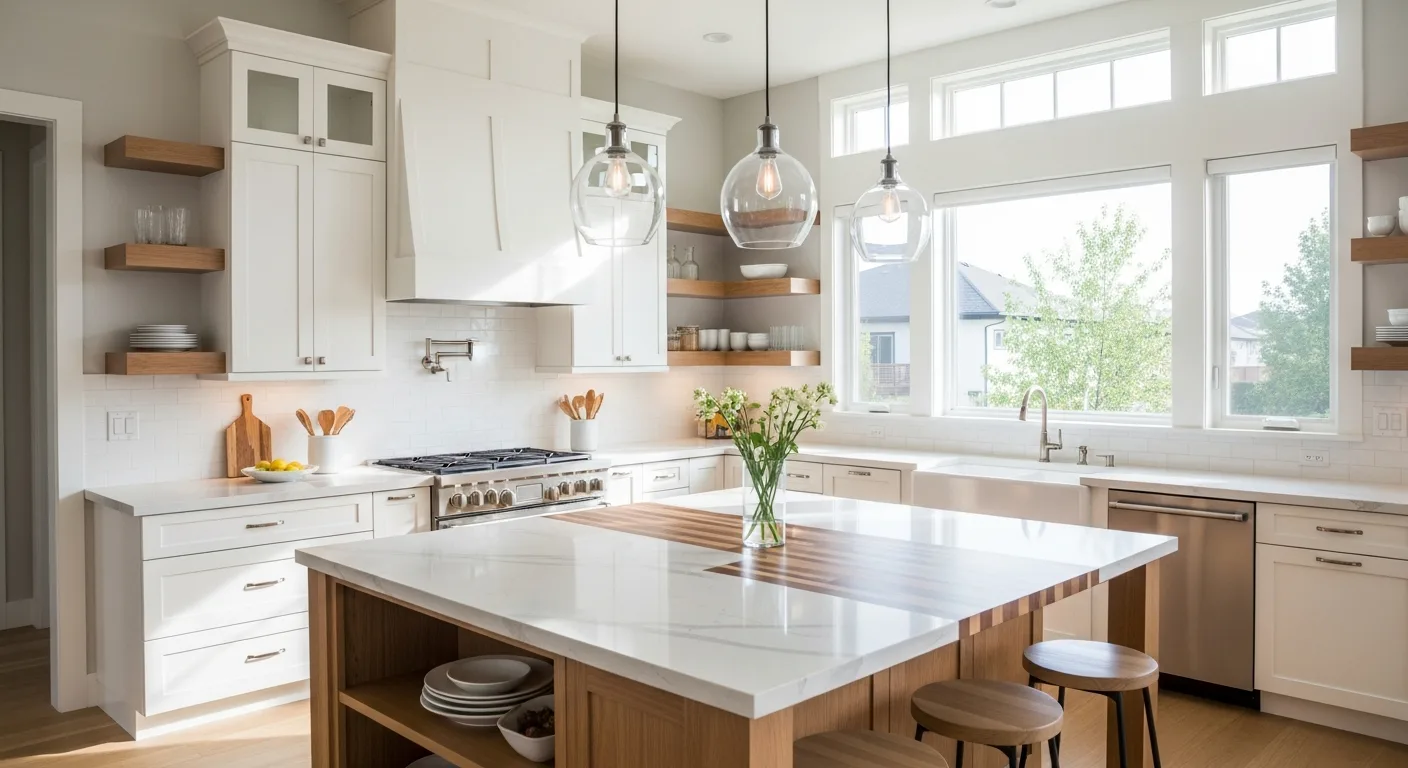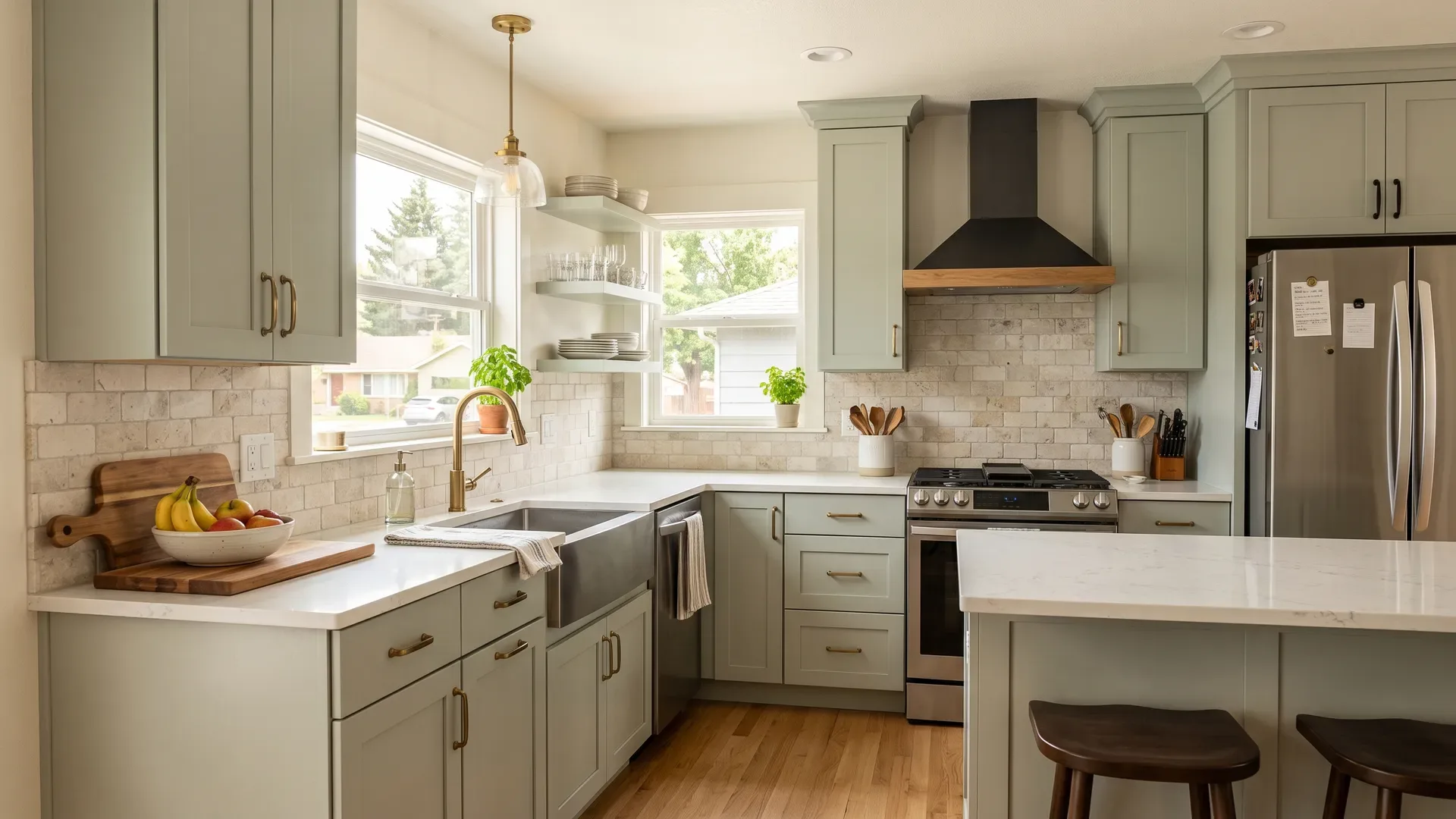
Sage green kitchen cabinets are one of the most enduring choices in today's kitchens because sage is a soft, muted gray-green that reads as a warm neutral rather than a bold color - calming, natural, and endlessly easy to live with. It pairs beautifully with brass, black, and nickel hardware, with white and warm-wood counters, and with both modern and traditional styles. Whether you use it on every cabinet or just the island, sage brings personality and warmth without the risk of a trendier color. Here is how to design a sage green kitchen that feels timeless, including the finishes, counters, and hardware that make it sing.
Key takeaways: Sage is a muted gray-green that behaves like a warm neutral - calm, natural, and timeless. Pair it with brass or black hardware, white or wood counters, and use it full-kitchen or on an island. See all cabinet colors or explore kitchen cabinets.
Why sage green works so well
Tap to expand
Why sage green works so well
Sage occupies a rare sweet spot in the color world: it has genuine personality, yet it behaves like a neutral. Because it is muted and grayed-down rather than saturated, it does not overwhelm a room or fight with other elements the way a brighter green might. It reads as calm, organic, and sophisticated - connected to nature without being loud about it. That quality is exactly why sage has staying power where trendier colors fade: it is easy to live with day after day, it flatters warm and cool palettes alike, and it never feels like it is trying too hard. For homeowners who want color but worry about tiring of it, sage is often the answer, because it delivers warmth and character while still feeling like a backdrop you can relax into.
Choosing your shade of sage
Tap to expand
Choosing your shade of sage
Sage is a family, not a single color, and the shade you choose sets the whole mood. Lighter, grayer sages feel airy, soft, and modern, keeping a kitchen bright while adding a whisper of color. Deeper, earthier sages lean warm and cozy, giving a room more presence and a traditional or organic-modern feel. Some sages tilt more gray, others more green or even slightly gold - and the surrounding light will pull them one way or another. As with any cabinet color, the single most important step is to test large samples in your own kitchen at different times of day, because a sage that looks perfect on a chip can read too gray, too green, or too drab once it is on the cabinets in your light. Getting the exact shade right is what separates a sage kitchen that sings from one that feels muddy.
The best hardware for sage cabinets
Tap to expand
The best hardware for sage cabinets
Hardware is where a sage kitchen comes to life, and sage is generous - it pairs beautifully with several finishes. Brass and aged gold are the standout pairing, bringing warmth that makes sage feel rich and intentional, with a slightly vintage, collected elegance. Matte black gives a crisp, modern contrast that grounds the softness of the green. Brushed nickel and stainless keep things classic and understated. And oil-rubbed bronze leans into a warm, traditional look. Brass is the most popular and arguably the most flattering choice for sage, but any of these works - the key is choosing one finish and using it consistently throughout. See our cabinet hardware guide for placement and selection tips.
Countertops and backsplashes for sage
Tap to expand
Countertops and backsplashes for sage
Sage is remarkably flexible with counters and backsplashes, which is part of its appeal. White and warm-white quartz or marble-look surfaces keep the kitchen bright and let the sage read as a soft accent - the most popular and safest pairing. Warm natural stone with beige and cream tones plays up sage's earthy, organic side. Butcher block and wood counters lean into the natural, farmhouse feeling that sage evokes so well. For the backsplash, simple white subway tile, a warm natural stone, or a soft zellige-style tile all complement sage without competing. The guiding principle is to keep the counters and backsplash relatively calm and let the cabinet color be the quiet star.
Full kitchen or just the island?
Tap to expand
Full kitchen or just the island?
You can commit to sage across the whole kitchen or use it as an accent, and both look wonderful. A full sage kitchen wraps the room in soft, calming color and makes the strongest statement - ideal if you love the color and have the light to carry it. A sage island against a white or off-white perimeter is the two-tone approach: it introduces the color as a focal point while keeping the rest of the kitchen bright and neutral, which lowers the commitment and hedges against ever tiring of it. Sage on the lowers with lighter uppers is another balanced option that keeps the room feeling open. If you are sage-curious but cautious, start with the island; if you are sure, a full sage kitchen is a beautiful, enveloping choice.
Sage across styles
Tap to expand
Sage across styles
One of sage's quiet strengths is how well it crosses design styles. On Shaker doors it is a modern-farmhouse and transitional favorite, warm and timeless. On flat-panel or slab doors it leans organic-modern, especially with matte black hardware. In a traditional kitchen with raised-panel doors and brass, sage feels classic and English-country. And in a rustic space it plays beautifully against natural wood and stone. Because the color is muted and natural, it adapts to whatever door style and hardware you build around it - much like a neutral would - which is a big reason it works in so many different homes. Whatever your style, sage tends to make it feel a little warmer and more grounded.
Is sage a trend or timeless?
Tap to expand
Is sage a trend or timeless?
It is fair to ask whether any color will look dated in ten years, and sage has a stronger case for longevity than most. Green tones have appeared in kitchens for generations, and muted, earthy greens in particular have a long history precisely because they read as natural neutrals rather than of-the-moment statements. Sage is popular right now, but its restraint is what protects it - because it is soft and grayed rather than bold and saturated, it does not carry the "expiration date" of a trendier color. And if you ever do want a change, repainting cabinets is far cheaper than replacing them, and a sage island is an even smaller commitment. All told, sage is about as safe as a colored kitchen gets. For the broader picture, see our guide to the best cabinet colors.
Pairing sage with the rest of the room
Tap to expand
Pairing sage with the rest of the room
Sage cabinets do not live alone, and the surrounding palette determines whether they feel elevated or drab. On the walls, warm whites, soft creams, and gentle warm neutrals let sage breathe and keep the room bright; avoid cold gray-blues, which can flatten the green and make the whole kitchen feel cool. For flooring, warm wood tones - light oak through medium walnut - are sage's natural partner, reinforcing its organic, earthy character, while warm-toned tile also works well. Metals and accents can lean into the warmth with brass and natural wood, or add crisp contrast with black; either reads as intentional as long as it is consistent. Even greenery and everyday styling matter: a few plants, natural textures like linen and rattan, and warm-toned dishware amplify the calm, garden-inspired feeling that makes sage so appealing in the first place. Think of sage as the anchor of a warm, natural palette rather than a color you drop into a cool one, and the whole kitchen will feel cohesive and inviting. Beyond the kitchen, the same sage looks equally at home on a bathroom vanity or a mudroom built-in, so it is an easy way to carry a cohesive color through the house.
Common mistakes with sage kitchens
Tap to expand
Common mistakes with sage kitchens
A few missteps can keep a sage kitchen from reaching its potential. Choosing the shade off a tiny chip instead of testing large samples in your light is the most common, and it is how sage ends up looking too gray or muddy. Pairing sage with cool, stark-white counters and cold-toned everything, which drains its warmth - sage wants at least some warmth around it. Mixing too many hardware finishes, which muddles the calm sage is meant to create. And over-accessorizing with lots of competing color, when sage looks best with a restrained, natural palette around it. Avoid these and let sage be the quiet, warm star, and the kitchen will feel effortlessly elegant.
The bottom line
Tap to expand
The bottom line
Sage green cabinets endure because sage is the rare color that behaves like a neutral - soft, warm, natural, and easy to live with year after year. Get the shade right by testing it in your own light, pair it with brass or matte-black hardware and a warm-white or natural-stone counter, and decide whether you want it wrapping the whole kitchen or anchoring the island. Do that and you get a kitchen with real personality and warmth that still feels timeless and calm. In a world of colors that come and go, sage has proven itself one of the most livable and lasting choices you can make.
Design your sage kitchen with Boise Cabinet Co
Tap to expand
Design your sage kitchen with Boise Cabinet Co
Boise Cabinet Co builds custom sage green kitchen cabinets - full-kitchen or as a two-tone island - with the brass or black hardware and warm finishes that make sage sing, for homes across Boise, Meridian, Eagle, and Nampa. Explore our colors and finishes, then get a planning range or book a free in-home consultation. We will help you dial in the exact shade of sage in your real kitchen light and pair it with the counters and hardware that make it timeless, so your kitchen feels warm, natural, and elegant for many years to come.